Primary 2 Examination Questions For First Term Free
Free Lower Basic School Exam Questions for First term. Basic 2/Primary 2 Examination Questions and answers 1st term Objectives and Theory.
History Primary 2 Examination Question for First Term
INSTRUCTION – Answer all the questions. Choose the correct answer from the options A – C.
SECTION A: OBJECTIVES
1). Indigenous people are also known as ____ or _____ people (a) first, dull (b) second naïve (c) first, native
2). The indigenous people of a community or state are also known as ______ (a) indigo (b) indigenes (c) colour
3). A person who arrived from another place to live in another community is known as ____(a) non-citizen (b) non-settle (c) non-indegenes
4). Non-indegenes can cause ____ (a) love (b) hatred (c) care
5). There are ____ states in Nigeria (a) 24 (b) 36 (c) 34
SECTION B: WRITE ‘TRUE’ or ‘FALSE’
6). The indigenous people of Lagos are Edo, Esan (Ishan)?__________
7). The indigenous people of Anambra are Onitsha, Umueri?____________
8). The indigenous people of Edo are Yoruba, Awori , Egun, Ijebu? ____________
9). The indigenous people of Ogun state are Ibadan, oyo, ibarapa? ____________
10). The indigenous people of Kano are Hausa? ________
SECTION C: WRITE ‘YES’ or ‘NO’
11). There are more than 250 Ethnic groups or tribes in Nigeria? _________
12). The three (3) largest of the ethnic groups are the Hausa, Yoruba , Igbo (Ibo)? __________
13). There are six largest ethnic groups?___________
14). A person born in Nigeria is called a citizen? ________
15). Nigeria is found in the Northern part of Africa in the map? ___________
SECTION D: Identify, Match the group of Nigerian people
16). The TIV people In the South, south
17). The Yoruba In the North
18). The Igbo(ibo) In the South East
19). The Hausa(Fulani) South West
20). The Efik North Central
SECTION E: THEORY (Answer 4 questions out of 5)
Fill in the gap by underlining the right answer
1a) A_________ is a human settlement ( Town , State )
1b). An example of town are these except_____________ ( Akure town , home town )
2a)______ overcome their fear of danger in order to do good for others ( heroine , heroes)
2b) The ______________ of a book , play or story is the main character who has good qualities ( hero, actress )
3a) Some examples of heroes are Ahamadu Bello and _______________________________ ( Obafemi Awolowo , Florida Ugonna)
3b) A_____ is a girl or woman who has doen something brave ( heroine, heroes)
4) Some examples of heroine ( woman) are Madam Efunroye Tinubu and ______________ ( Margaret Florida, Margret Ekpo )
5a) The qualities of heroes and heroines are courage, honesty, and____ ( patience, fighting)
5b). Write ‘TRUE or FALSE’
i) A hero is not brave ____________________
ii) An heroine must be honest_____________
iii) There are no heroes in Nigeria__________
iv) A male is regarded as hero___________
v) A female is regarded as heroine _________
History OBJ Answers
1.C
2.B
3.C
4.B
5.B
6. False
7. True
8. False
9. False
10. True
11.Yes
12. Yes
13. Yes
14. Yes
15. No
16. North central
17. South West
18. South east
19. In the North
20. South, south
THEORY: SECTION E ( Answers)
1A. Town
1B. Hometown
2a. Heroes
2b. Hero
3a. Obefemi Awolowo
3b. Heroine
4. Margret Ekpo
5a. Patience
5b. (i) False (ii) True (iii) False (iv) True (v) True
Access Lower Basic School Exam Questions for First term.Basic 2/Primary 2 Examination Questions and answers 1st term all subjects Objectives and Theory.
Agriculture Primary 2 Examination Question for First Term
INSTRUCTION – Answer all the questions. Choose the correct answer from the options A – C.
- __________ is gotten from the farm. (a) Indomie (b) Yam (c) Yogurt
- ___________ is a person who plants different seeds. (a) Crop builder (b) Crop feeder (c) Crop planter
- ___________ is a part of crop plant. (a) Narvel (b) Horn (c) Root
- Plants are used for ___________. (a) bathing (b) beautification (c) smelling
- One of the examples of harmful plant is __________. (a) mango tree (b) coral plant (c) tall tree
- ______________is the top part of the ground where plant grows. (a) Soil. (b) Water (c) Food
- _________ provides shelter for animals and people. (a) Agriculture (b) Teacher (c) Priest
- There are _________ types of soil. (a) seven (b) three (c) five
- __________ is an example of farm animal. (a) Lion (b) Goat (c) Kangaroo
- A person who grows crops and rear animals is called a _____. (a) teacher (b) farmer (c) doctor
- Can we use cutlass to carry load (a) yes (b) no
- ___________ is used to break large stone (a) hammer (b) harrow (c) hoe
- _________ is used for digging hole on the farm (a) cutting tool (b) washing tool (c) digging tool
- Modern tools are also called ___________ (a) shovel (b) rake (c) new farm tools
- _______ are small creatures with six legs (a) insects (b) cat (c) monkey
- Simple farm tools are used to cultivate _______ area. [a] small [b] large [c] medium
- ________ are implement used by farmer to work on farm. [a] School tools [b] Farm tools [c] Church tools
- ______ is used to break stones. [a] Spark [b] Harrow [c] Plough
- There are ______ types of farm tools. [a] 2 [b] 3 [c] 4
- ____ is used to break stones. [a] Harrow [b] Plough [c] Axe
- Modern tools are very _____[a] cheap [b] expensive [c] low
- Cutlass is used for _____ on the farmland . [a] digging [b] cutting [c] gathering
- ___ used to gather rubbish on the farm . [a] Hoe [b] Rake [c] Water pan
- _______ is use for wetting plant . [a] Watery can [b] Hoe [c] Drum
- _ cause pollen from one flower to another . [a] Butterfly [b] Termite [c] Bee
- All these are farm tools except ____ [a] biro [b] hoe [c] cutlass
- ____ are little animal with wing and legs. [a] Insects [b] Fish [c] Reptiles
- Example of insect is ____ [a] dog [b] ant [c] cat
- Insect fly with ________[a] wings [b] hands [c] walk
- Which of the following insect produces honey. [a] Termite [b] Bee [c] Ant
Agriculture Objectives (OBJ) Answers
1.B
2.C
3.C
4.B
5.B
6.A
7.A
8.B
9.B
10.B
11.B
12.A
13.C
14.C
15.A
16.A
17.B
18.A
19.C
20.C
21.B
22.B
23.B
24.A
25.B
26.A
27.A
28.B
29.A
30.B
THEORY ANSWER ANY 6 QUESTIONS
- What is simple farm tools?
- List 5 examples of simple farm tools
- Mention two maintain of simple farm tools
- Define insect
- b. Mention 4 examples of insects.
- Draw a Tick.
- Give two uses of cutlass
- What is digging tools
Basic Science and Technology Primary 2 Examination Question for First Term
INSTRUCTION – Answer all the questions.
Choose the correct answer from the options A – C.
- These are the two types of smell , pleasant and _____ (a) unpleasant smell (b) pleasing smell (c) praise smell
- We have ___________ types of road (a) 2 (b) 3 (c) 4
- _____ and ____ are objects we can find in the bedroom (a) bed and pillow (b) sand and stone (c) spoon and gas
- Which colour means stop in traffic light (a) red (b) green (c) yellow
- _____ and _____ are object found in the sitting room (a) chair and television (b) tree and stone (c) spoon and pot
- The object that can be found in the toilet are _______ and ______ (a) soap and sponge (b) pot and spoon (c) chair and table
- One of the thing we can find in the school compound is _____ (a) slides (b) stream water (c) television
- All these are types of road except _____ (a) untarrred road (b) tarred road (c) field
- Do not walk with your back to oncoming traffic (a) true (b) false
- Always face oncoming traffic (a) true (b) false
- All these are found in the sitting room except ________(a) water closet (b) television (c) chair
- The soil is part of our environment (a) true (b) false
- The soil can be touched or held (a) true (b) false
- Soil it is a non-living thing (a) true (b) false
- Some animals live in and on the soil (a) true (b) false
- Can plants grow in the soil (a) true (b) false
- There is also air and water in the soil (a) true (b) false
- _______ and ____ are plants we can find in the school garden (a) tomatoes and vegetable (b) rice and cocoa
- Our environment is our surroundings (a) true (b) false
- Our surroundings is made up of both living and non-living objects (a) true (b) false
- We use __________ to sweep the floor (a) pencil (b) broom (c) plate
- The sense organs are the parts of body that enable us to see, smell, hear, taste, and touch or feel. (a) true (b) false (c) maybe
- The function for the sense of sight is ____(a) smelling (b) tasting (c) seeing
- The function of the sense organ of sound is ____(a) smelling (b) hearing (c) seeing
- What is the function of the sense organ of touch is ___(a) smelling (b) feeling (c) tasting
- The organ for the sense of sight is called__(a) the eyes (b) the nose (c) the skin
- ____ soil is the loose parts of the soil used for building of houses and construction of roads. (a) sandy (b) loamy (c) clay
- Crops do not grow well on sandy soil (a) true (b) false (C) maybe
- ____ soil is sticky when wet and hard when dry (a) clay (b) loamy (c) sandy
- Identify the shape below and its colour
- Start, square (b) star, rectangle (d) rectangle, box


BST Objectives (OBJ) Answers
1.A 2.A 3.A 4.A 5.A 6.A 7.A 8.C 9.A
10.A 11.A 12.A 13.A 14.A 15.A 16.A 17.A
18.A 19.A 20.A 21.B 22.A 23.C 24.B 25.B
26.A 27.A 28.A 29.A 30.B
THEORY- answer any 6 question
SECTION A
- Sense of sight ______________ hearing
2. Sense of smell ______________ feeling
3. Sense of sound ______________ seeing
4. Sense of taste ______________ feeling
5. Sense of touch ______________ smelling
SECTION B answer any 5 questions
- Draw any two of the sense organs.
- Find out 10 other things we can see with our eyes.
- Listen and identify different sound from animals and other objects.
- Classify smell as pleasant and unpleasant smell.
- Describe 5 taste of food substances.
- Differentiate between 4 types of taste.
- State 3 importance of tongue.
- State 3 importance of the skin.
- Explain the meaning of soil.
- State the 3 types of Soil.
- State the properties of sandy soil.
Christian Religious Studies Primary 2 Examination Question for First Term
INSTRUCTION – Answer all the questions. Choose the correct answer from the options A – C.
- _____ is a way we talk to God and God talks to us. A. Prayer B. Talk
- When pray we pray to ______. A. God B. Ourselves
- We must pray everyday. A. Yes B. No
- When we were pray, we talk to God. A. Yes B. Not
- We must always pray for our family. A. Yes B. No
- We must pray for Nigeria too. A. Yes B. No
- When we pray, we ask God for our daily needs. A. Yes B. No
- Pray is the master key. A. Yes B. No
- We can pray anywhere. A. Yes B. No
- Do you pray before you eat? A. Yes B. No
- Prayer is an act or way of _____ (a) singing (b) communicating with God (c) closing one’s eyes
- God hears us when we pray to him __________ (a) while in sin (b) without sin (c) in anger
- ___________ gave us the Lord’s prayer (a) God (b) Jesus (c) Angel Gabriel
- We must make our heart desires known to God through ______(a) prayers (b) fighting (c) dancing
- ___________ is a man of prayer (a) Judas (b) Jesus (c) Satan
- Jesus talks to his father in heaven through __________ (a) eating (b) dancing (c) prayer
- Jesus raised ________ from the dead. (a) Lazarus (b) Moses (c) Saul
- ____________ prepared Jesus for the task ahead. (a) Exercise (b) meat (c) prayer
- Jesus prayed before _____ (a) feeding five thousand people (b) feeding five hundred people (c) one million people
- We must pray without _________ (a) good job (b) salary (c) ceasing
- We must pray to God __________ (a) crazily (b) secretly (c) angrily
- When we pray, we must have _________(a) faith (b) no faith (c) money
- Jesus ask us to pray _________ (a) once a year (b) twice (c) always
- Prayer is ___ for Christians (a) bad (b) good (c) fair
- ______ is needed when we pray (a) money (b) faith (c) rain
- Praying without ceasing means praying (a) monthly (b)yearly (c) always
- We must start our prayers by calling (a) The name of Jesus (b) The name of Satan (c) the name of teacher
- Our prayer to God should be _________ (a) specific (b) with sin in our heart (c) noisy
- The bible talks about different types of prayers. (a) True (b) False
- Thanksgiving prayers should be said only when good things happen to us. (a) True (b) False
- ______ prayer means praying for the needs of others seeking God’s will for lives. (a) intercessory (b) faithful (c) forgiveness
- Prayer of _________ is said to seek God’s face. (a) supplication (b) faith (c) thanksgiving
- We do not have to confess our sins (a) True (b) False (c) I dont know
- We should pray for _________ (a) knowledge (b) wisdom (c) all of the above
- Who prayed for wisdom and understanding (a) David (b) Solomon (c) Adam
- When we commit sin, we should pray for ________ (a) power (b) wealth (c) forgiveness
- __________ prayed for help at the red sea. (a) Moses (b) Joshua (c) Eve
- Paul and Silas prayed and sang praises unto God at ___________ (a) mid-day (b) mid-afternoon (c) mid-day (d) evening
- When the prison shook, the keeper of the prison became _________ and fell before Paul and Silas. (a) Afraid (b) Bad (c) Happy
- From Paul and Silas’ Experience, we learn that prayer cannot set us free from bondage. (A) True (B) False
CRS Objectives (OBJ) Answers
1.A
2.A
3.A
4.A
5.A
6.A
7.A
8.A
9.A
10.A
11.B
12.B
13.B
14.A
15.B
16.C
17.A
18.C
19.A
20.C
21.B
22.A
23.C
24.B
25.B
26.C
27.A
28.A
29.A
30.A
31.A
32.A
33.B
34.C
35.B
36.C
37.A
38.D
39.A
40.B
THEORY- ANSWER ANY 5 QUESTIONS
- What is Prayer (2marks)
- Recite the Lord’s Prayer orally (2marks)
- Narrate or explain the birth of Jesus Christ (2marks) not in the scheme
- List 5 people God showed love to the Bible.
- Define prayer position.
- List different positions Christians could take while praying.
- Name different people in the Bible that prayed in different positions.
- What is the name of the angel God sent to Mary?
- List four things you should pray for.
- Mention three people that prayed in the bible .
- ________ prayed to God, and he heard him and sent a great fire from heaven burnt sacrifice
- Emmanuel means _________________
Primary 2 CCA Examination Question for First Term
INSTRUCTION – Answer all the questions. Choose the correct answer from the options A – C.
1. _____________ is a group of sound that people listen to and enjoy. A. Music B. Radio C. Speaker
2. Music is a _____________ that people listen to and enjoy. A. group of music B. group of songs C. group of sounds
3. _____________ can be voices or instruments. A. Music B. Drum C. Speaker
4. We listen to music with our _____________. A. Mouth B. Hands C. Ears
5. Music is a universal _____________. A. language B. culture C. English
6. ______ is an activity involving special skills in making useful things by hand. A. Craft B. Drawing C. Painting
7. Craft is a ______ work. A. Sinful B. Skillful C. Skinful
3. We use our ______ to make these things. A. Hands B. Legs C. Heads
8. ____________ is an activity involving special skills in making things by hand. A. Craft B. Drawing C. Painting
9. The are _____ types of crafts. A. 3 B. Three C. A and B
10. Craft is a ____________ works. A. Hard B. Soft C. Skillful
11. ____________ are real objects used for decoration and other purposes in the home. A. Embroidery crafts
Drawing of crafts items C. Crafts in the home
12. Which of the following is not a type of soil? (a) clay (b) stinky (c) sandy
13. Can three straight lines form a triangle? (a) True (b) False
14. The lines is ____ (a) Straight (b). Curved (c) Wavy
15. Clay is used to model the following except____ (a) Water (b) Animal (c) House
16. Clay is used in modelling visible objects (a) True (b) False
17. _____ can be used instead of water colour for painting (a) Pencil (b) Crayon (c) Biro
18. Identify the following colours,

19. Identify the shape and colour above
20. State the colour(s) of the following:
- National flag
- Mtn, Glo and Airtel logo
- School uniform scandals, building, books, etc.
- Army, navy and police colour
CCA Objectives (OBJ) Answers
1.A
2.C
3.A
4.C
5.A
6.A
7.B
8.A
9.C
10.C
11.A
12.B
13.A
14.A
15.A
16.A
17.B
THEORY
1. Explain the meaning of colour.
2. State 5 uses of colour.
3. List materials that produce colours.
4. Identify one traditional dance of their area.
5. Explain what music is.
6. State 3 importance of music.
7. Identify craft works.
8. Define and explain the meaning of craft correctly.
9. Name 3 of the craft at home.
10. Name 3 types of crafts.
Basic 2/Primary 2 Civic Education Examination Question for First Term
INSTRUCTION – Answer all the questions. Choose the correct answer from the options A – C.
- ________ are different ways to work together as citizens despite our issues and differences. A. Democratic practice B. Community’s values C. Free and fair election
- Civic refers to as educating the ______ (a) pupils (b) teachers (c) citizens
- Civic education teaches the participation of the citizens in their _______ (a) rights (b) government (c) religion
- ________ is when all votes have equal power and they are counted accurately. A. Free election B. Fair election C. Free and fair election
- ________ are the privilege enjoy by the citizens of a country. A. Rule and regulations B. Human rights C. Rule of law
- Volunteer to be active in your community is part of the duties of a good citizens (a) yes (b) no (c) may be
- Some of the rights and duties of a good citizens are _______ (a)right to life and right to property (b) social dimensions (c) different people’s life
- Does civic education teaches the rights and duties of a citizens (a) yes (b) no (c) no answer
- Respect others property is part of good citizens (a) yes (b) no (c) no answer
- Paying of taxes are also part of a good citizens duties (a) yes (b) no (c) no answer
- Civic Education is the _______ that teaches us what we should do for our country and what our country should do for us. (a) word (b) subject (c) story
- ________ are those things citizens of a country must have and enjoys. (a) power (b) rules (c) rights
- Community’s values are generally acceptable standard of beliefs about what is good for the community (a) Yes (b) No
- ________ is the voice and will of the people. A. Community B. Nationality C. Democracy
- When reciting the National Anthem, we stand ________. (a) down (b) right (c) move
- Civic Education allows people to live In peace with one another. (a) True (b) False
- In democracy, the people decide how government is run by ________. A. Voting B. Election C. Rule of law
- The green colour on the flag stands for __________. (a) plant (b) flower (c) agriculture
- ______ is the honour and regard we give to someone, something or places. (a) Honesty (b) Respect (c) Kindness
- The National Flag was divided into _______ equal parts. (a) four (b) five (c) three
- The colour of the Nigerian National Flag are ____, ___ and ___. (a) green, white and yellow (b) green, white and green (c) green, blue and red
- The National Flag was designed in the year _________. (a) 1958 (b) 1955 (c) 1959
- The government is designed for the people and by the people. A. True B. False C. Maybe
- Who designed the National Flag? (a) Mr. Bola Akinwunmi (b) Mr. Taiwo Akinkunmi (c) Mr. Tolu
- ________ describes the equality of all the citizens before the law. A. Rule and regulations B. Human rights C. Rule of law
- Honesty means _______[a] tolerance [b] truthfulness [c] fighting
- Rules and regulations protects life and _______[a] properties [b] river [c] books
- _________ means working together as one to achieve a common goal.[a] Fighting[b] Stealing [c] Co-operation
- ________ is part of respect. [a] Greetings [b] Crying [c] Weeping
- We must ________ other people views. [a] disrespect [b] respect [c] blame
- Things to respect are ______[a] market & church [b] toilet & bathroom [c] national anthem & pledge
- We should __________ when the national anthem is going on . [a] sit [b] stand [c] dance
- ______ is the colour of Nigeria flag. [a] Blue White Blue [b] Green White Green [c] Yellow White Yellow
- We should _______ with each other. [a] fight [b] quarrel [c] co – operate
- Civic education is important because _______ [a] it builds us morally [b] it makes us a bad citizen [c] it make us lazy
- Showing good behavior towards somebody is ______ [a] laughing [b] crying [c] respect
- It is the ____ of the citizens to taxes. [a] duty [b] legacy [c] game
- Unity brings ____[a] peace [b] war [c] enemy
- Children should play only with _____ [a] television [b] toys [c] Gas cooker
- ______ is the study of right and duties of a citizen. [a] Civic education [b] Human right [c] Duties studies
Civic Education Objectives (OBJ) Answers
1.A
2.C
3.A
4.C
5.B
6.A
7.A
8.A
9.A
10.A
11.B
12.C
13.A
14.C
15.B
16.A
17.A
18.C
19.B
20.C
21.B
22.C
23.A
24.B
25.B
26.B
27.A
28.C
29.A
30.B
31.C
32.B
33.B
34.C
35.A
36.C
37.A
38.A
39.B
40.A
THEORY – ANSWER ANY 5 QUESTIONS
1. Civic education is the study of right and duties of a ________________.
2. Mention 2 things to be respected .
3. Every child has right to ________________ .
4. Civic education can be important at _____and ______.
5. We must respect our __________________ .
6. Mention four people we must respect.
7. Mention two National Symbols.
8. Mention two duties citizens must do for their country.
9. Mention four places we must respect.
Basic 2/Primary 2 English Studies Examination Question for First Term
INSTRUCTION – Answer all the questions. Choose the correct answer from the options A – C.
ENGLISH LANGUAGE
SECTION A – COMPREHENSION
INSTRUCTION – Read the passage carefully.
Femi and father are painting their house. They have four buckets of paint. They have pink, red, blue and white paint. They have three paint brushes and three rollers. They also have a tray. Femi and his father are using the red paint to paint the wall. Femi is using a big roller and his father is using a paint brush. The red paint is in the tray. Femi likes helping his father to paint their house.
QUESTIONS
a. What are femi and his father doing?
b. What colour paint do they have?
c. How many paint brushes do they have?
d. What are they painting real?
SECTION B
INSTRUCTION – Fill in the spaces with the correct form of words.
1. There _____ a small window in the kitchen. [a] is [b] are [c] has
2. There ________ three chairs around the table. [a] is [b] are [c] in
3. You must throw your ________ in the bin. [a] food [b] money [c] litter
4. We grow vegetables in our ________. [a] garden [b] church [c] school
5. Never ________ with a sharp knife.[a] run [b] drive [c] play
6. People who are very sick or injured have to go to the ______ [a] school [b] hospital [c] market
7. I have five ________. [a] book [b] books [c] books
8. All the ________ are crying. [a] children [b] child [c] childrens
9. The tortoise walked ________. [a] madly [b] slowly [c] fastly
10. The monkey ate a ________ of banana. [a] key [b] band [c] bunch
11. December is the ________ month of the year. [a] first [b] last [c] third
12. Eniayo ________ the plants. [a] waters [b] water [c] watered
13. My name ________ Tresure. [a] are [b] were [c] is
14. Everybody ________ a ruler. [a] many [b] has [c] have
15. She likes to ________. [a] sang [b] song [c] sing
SECTION C
INSTRUCTION – Fill in the gaps with these words.
QUESTION 1 – Match each word with the correct meaning.
a. Medicine the room in a home where you store or prepare food b. Holiday something that you put things in
c. Kitchen a break from school or work
d. Suitcase ills or syrup you take when you are sick
QUESTION 2 – Fill in the spaces with the correct plural words.
a. The ________ were big (bus).
b. I can see many ________ over there (cow).
c. The woman sold some ________ (potatoe).
QUESTION 3 – Words and opposite.
a. Man ________
B. ________ King
c. Cold ________
QUESTION 4 – Complete with possessive pronoun. hers, mine, his, it’s.
a. Dupe owns that dress. It is ________.
b. These houses belong to them. They are ________.
c. This is my shoes. It is ________.
QUESTION 5 – Copy and Complete each sentence about yourself.
a. My name is ________.
b. I am a ________.
c. I am ________ years old.
ENGLISH COMPOSITION
INSTRUCTION – Fill in the correct answers.
A FAMILY
1. A family consists of father , mother and their ________.[a] Children [b] Enemy
2. Father is the ________ of a family. [a] Tail [b] Head
3. The father provides ____ for the family. [a] Food [b] Sand
4. He pays the children’s school ____.[a] paper [b] fees
5. The ____ cares for the children.[a] mother [b] orphan
6. She also ____ for the family. [a] dances [b] cooks
7. The children run ___ for their parents. [a] race [b] errand
8. The children wash the plates and sweep the _____. [a] floor [b] sky
9. A small family is called ______. [a] extended family [b] nuclear family
10. l belong to a/an ________ family. [a] Nuclear [b] Extended
SECTION B
INSTRUCTION – Attempt all the questions.
1. The name of my father is ________.
2. The name of my mother is ________.
3. A ________ is a domestic animal.
4. The name of my best friend is ________.
5. My best game is ________.
ENGLISH LITERATURE
INSTRUCTION – Choose the correct answer from the options.
1. Chi’s doll is ________. [a] blue [b] pink [c] red
2. ________ is chi’s pal. [a] Obi [b] Oba [c] Uche
3. ________ is chi’s pet. [a] Ray [b] Roy [c] Rose
4. Ray ________ it’s tail. [a] wags[b] dance [c] rolls
5. ________ killed Ray.[a] A car [b] A goat [c] A bicycle
6. Who was sad when Ray died? [a] Chi [b] Obi [c] Ray’s mum
7. Has Ray gone out to play before? [a] Yes [b] No [c] Sometimes
8. ________ put Ray in a sack. [a] A man [b] A woman [c] A boy
9. How old is chi? [a] Four [b] Six[c] Seven
10. Did dad go to work? [a] No [b] Yes
SECTION B
INSTRUCTION – Attempt all the questions.
1. Pal means ________.
2. What is chi friend’s name?
3. What is chi dog’s name?
4. How old is chi?
5. What happened Ray?
Basic 2/Primary 2 Verbal Reasoning Examination Question for First Term
INSTRUCTION – Choose the correct answer from the options.
1. A place where sick person go treatment is called _______ [a] hospital [b] mosque[c] church
2. How many days are in a week? [a] 7 [b] 2 [c] 5
3. ________ is the capital of Nigeria. [a] Lagos [b] Abuja [c] Kano
4. Vowel letters are a e i o ___. [a] p [b] u [c] h
5. How many consonant letters are there in alphabet? [a] 22 [b] 26 [c] 21
6. Hospital => Drugs, School => ________ [a] food [b] teach [c] fan
7. Eyes => See, Mouth => ________ [a] eat [b] look [c] sleep
Write out the number of Consonant.
8. C h u r c h [a] 6 [b] 5[c] 4
9. M a r k e t [a] 4 [b] 5 [c] 6
10. The first three letters in the english alphabet are ________. [a] DEF [b] ABC [c] LMN
Pick a letter from the bracket that will end the first and begin the second to fill the blanks.
11. A r r o ( ____ ) a t e r [a] g [b] h [c] w
12. T o m a t ( ____ ) p e n [a] o[b] e [c] n
13. B r e a ( ____ ) r u m [a] f [b] d [c] s
Pick the word that sound similar with one of the ones in bracket
14. Wood_____ [a] Week [b] Would
15. Thief ___[a] chief [b] fish
SECTION B
INSTRUCTION – Attempt all the questions.
Example – E g g = 5 7 7
a. B a n k = ________
b. W o m a n = ________
b. S l e e p = ________
d. T e a c h e r = ________
Circle the general word that describe other words.
a. Father Family Mother Children
b. Orange Grape Fruit Banana
c. Dog Pig Elephant Animal
d. Girl Sister Female Daughter
Rearrange the letters below to form a word.
a. a o s p = ________
b. h e f a t r = ________
c. n s e a b = ________
d. n a b a n a = ________
Fill in the blanks with suitable words from the bracket.
a. Boy is to girl as ________ is to women (Man, Lady, Don)
b. Cat is to kitten as ________ is to puppy (dog , goat, cow)
c. Day is to week as ________ is to year (Sunday, month, festival).
d. Knife is to ________ as gun is to shoot (blade, cut, handle).
5. Write out the vowels in these words.
a. B o o k = ________
b. P a p e r = ________
c. S e e = ________
d. R i c h = ________.
Basic 2/Primary 2 Home Economics Examination Question for First Term
INSTRUCTION – Answer all the questions. Choose the correct answer from the options A – C.
- Food can be in all these forms except ____________ form. (a) liquid (b) gaseous (c) solid
- Food are substances that _______ (a) gives the body nutrients and energy (b) diseases (c) weakness
- There are _________ food group (a) 3 (b) 6 (c) 8
- ________ is not a group of food (a) body building food (b) protein (c) body weakening food
- Carbohydrates gives ___________ and __________ to the body.
(a) proteins and vitamins (b) warmth and energy (c) protection and vitamins
- ____________ is a room in the house where we eat our food. (a) dinning room (b) kitchen (c) toilet
- A ______ is a room in the house where we prepare our food . (a) bedroom (b) toilet (c) kitchen
- We should take proper care of our kitchen (a) true (b) false (c) no
- Furniture are found in the ____________ (a) toilet (b) bathroom (c) sitting room
- ____________ is not a way of taking care of food store.
(a) removal of cobweb (b) littering (c) weekly cleaning and airing
- Bathroom and toilet should be washed ____________ (a) daily (b) monthly (c) yearly
- Wearing beautiful hairstyle makes a woman look __________ (a) good (b) dirty (c) unhappy
- A benefit of right personal appearance is that it __________(a) wastes money (b) is durable (c) wastes time
- __________ is a room in the house where guests are entertained and where we relax. (a) sitting room (b) dinning room (c) kitchen
- Which of this is NOT a type of house that people live in (a) toilet (b) hut (c) bungalow
- __________ can be found in the sitting room (a) stove (b) television (c) fridge
- ___________ influence the choice of our personal belongings (a) money (b) ghost (c) rector
- Which of the following is NOT a personal belonging? (a) clothes (b) combs (c) church building
- Which of these personal belonging is very expensive (a) jewelry (b) towel (c) brushes
- _____________ does not influence the choice of personal belonging (a) money (b) sex (c) name
- Like and dislikes are also factors that influence the choice of personal belongings. (a) True (b) False
Match each of the objects to its use
- Brush for scrubbing the body
- Sponge cleaning the body
- Towel To protect the feet
- Shoe for brushing the teeth
- _________ is both body building and body protecting food (a) rice (b) milk (c) yam (d) butter
- _______ fights against diseases in the body (a) carbohydrates (b) vitamin & minerals (c) alchohol
- _____________ makes us grow (a) sand (b) food (c) water
- We should take care of our body by _____________
(a) bathing regularly (b) bathing once (c) playing
- Cleanliness is good for our health (a) true (b) false
Home Economics Objectives (OBJ) Answers
1.B
2.A
3.B
4.C
5.B
6.A
7.B
8.A
9.C
10.B
11.A
12.A
13.B
14.A
15.A
16.B
17.A
18.C
19.A
20.C
21.A
THEORY (30marks)
- Match each of the rooms in the house to its use:-
- Food store:- for removing waste products from the body
- Bathroom:- for cooking our food, washing plate and serving food
- Toilet:- for taking over our meals and for entertainment
- Kitchen:- for taking our bath
- Dinning room:- for keeping food stuffs e.g beans, rice and yam
2a. List 3 functional rooms in the house (6marks)
______________________________________________________
______________________________________________________
______________________________________________________
______________________________________________________
- Mention two uses of bathroom (4mrks)
______________________________________________________
______________________________________________________
______________________________________________________
______________________________________________________
- Mention 5 ways we can take care of sitting room (10marks)
Basic 2/Primary 2 Maths Examination Question for First Term
- Count and write numbers 170 – 200
- Write in words:
- 57 = _________________________________
- 92 = _________________________________
- 64 = _________________________________
- 85 = _________________________________
- 110 = _________________________________
- 135 = _________________________________
- 127 = _________________________________
- 154 = _________________________________
- 172 = _________________________________
- 199 = _________________________________
- Fill in the missing gaps:
301 ____________ ___________ ________________ ______________ 306____________ 400 ___________ ________________ ______________404 , 599 ____________ ___________ ________________ ______________ _____________
d. Place value: Write the correct numbers
Example: 4 tens 6 units = 46 NOW DO THESE:
- 9 tens 9 units = ________________
- 3 tens 5 units = ________________
- 64 = _________ tens ___________ units
- 78 = __________ tens ___________ units
- 35 = __________ tens ____________ units
- Addition of numbers:
1. T U 2. T U 3. T U 4. T U
1 9 2 6 1 9 3 6 + 6 + 1 7 + 1 8 + 1 7
_______________ ________________ _________________ ________________________ ___________________
________________ ___________________ ___________________ __________________ ____________________
5. T U 6. T U 7. T U 8. T U
3 9 3 6 4 6 4 9
+ 2 8 + 2 4 + 1 7 + 3 8
________________ ______________ _______________ ___________________________ __________________
________________ _________________ _________________ _____________________ ____________________
9. T U 10. T U 11. T U 12. T U
4 9 4 7 2 6 5 6
+ 3 4 + 3 8 + 1 4 + 1 7
_______________ _________________ __________________ ______________________ ________________
_________________ ____________________ ___________________ __________________ __________________
13. T U 14. T U 15. T U
2 9 2 7 4 9
+ 1 8 + 2 5 + 3 4
_______________ __________________ _____________________ ____________________
__________________ _____________________ ________________ ______________________
- Subtraction of Numbers:
16. T U 17. T U 18. T U 19. T U 20. T U
9 1 2 4 4 2 8 5 8 6
_ 6 – 6 – 9 _ 6 _ 9
____________ ____________ _______________ _______________ __________ ___________ ____________
____________ ________________ _________________ ____________________ _______________ ______________
- Copy and fill in the missing gaps:
- 2 4 6 8 _____________ _____________ ________________
- 12 14 16 _______________ _____________ ________________
- 74 76 ___________ 80 _____________ ____________ _ _____________
- 1 3 5 7 _____________ _____________ ________________
- 11 13 ____________ __ 17 ____________ 20 ____________ ________________
- 62 ____________ ____________ 68 70 ____________ ____________
- 6 8 _____________ ______________ ______________ 16 ________________
- 35 _______________ ______________ 41 ___________ _________________ 47
- 28 30 _____________ ______________ _______________ 38 _________________
29 ____________ 33 _______________ _________________ 39 ____________________
Basic 2/Primary 2 PHE Examination Question for First Term
INSTRUCTION – Answer all the questions. Choose the correct answer from the options A – C.
- We also run in the high jump. (a) Yes (b) No
- High jump is jumping over a raised bar. (a) Yes (b) No
- The run up is running towards the raised bar. (a) Yes (b) No
- Take off means jumping high. (a) Yes (b) No
- We should look back when running towards the bar. (a) Yes (b) No
- Which of these stages in high jump comes first? (a)land and recovery (b)take off (c)run off
- In high jump, we jump for _____ (a)stress (b)distance (c)weight
- _______ keeps us physically fits (a)stress (b)exercise (d)weakness
- Galloping is a fundamental movement pattern associated with __________ (a)bird (b)goat (c)horse
- A ________ climbs (a)bird (b)monkey (c)none of A&B
- A _________ crawls (a)goat (b)monkey (c)donkey
- ______ means changing position by walk, crawling, etc (a)movement (b)spinster (c)communication
- ____________ is the ability to easily move our body parts in the required direction (a)sport (b)flexibility (d)rigidity
- Flexibility is required in _______ (a)rigidity (b)bending (c)none of A&B
- Which of these means strength? (a)weakness (b)energy (c)indolence
- ___ are ways of exercising the body. [a] Jumping and skipping [b] Eating and Sleeping [c] Praying and looking
- Marching is a movement common among _______ troops. [a] military [b] doctors [c] runners
- A skipping __________ is the basic tool used for skipping activity .[a] cloth [b] wind [c] rope
- ____ means uniform and steady rhythmic walking forward . [a] Jogging [b] Marching [c] Running
- _____ is the activity of running at a gentle peace as a form of physical exercise .[a] Marching [b] Jogging [c] Jumping
- Long Jump is a ____ event . [a] field [b] track [c] indoor
- Obeying rules of games is a way of safety in athletics. [a] True [b] False [c] Maybe
- Which of these is correct to begin a race? [a] On your mark [b] On your line [c] At your start
- ______ is a first help given to an injured person before taken to the hospital . [a] Last aid [b] First aid [c] Middle age
- ______ movement is a form of movement used in the performance of various motor skills. [a] Locomotors [b] Non-Locomotors [c] Exercise
- All these are found in the first aid box except ___[a] plaster [b] cotton wool [c] book
- Athletes should always wear safety materials. [a] True [b] False [c] Maybe
- All these are fundamental rhyme except _____ [a] walking [b] hopping [c] fighting
- All these are factors affecting sleep except _____[a] Noise making [b] clapping [c] thinking
- Which of the following animal gallop. [a] Cat [b] Horse [c] Monkey
PHE Objectives (OBJ) Answers
1.A
2.A
3.A
4.A
5.B
6.C
7.B
8.B
9.C
10.B
11.B
12.A
13.B
14.B
15.B
16.A
17.A
18.C
19.B
20.B
21.A
22.A
23.A
24.B
25.A
26.C
27.A
28.C
29.C
30.B
THEORY Answer 6 questions only
1. Define locomotor movement.
b. List 4 examples of locomotor movement.
2. First aid is the first ____________________.
3. List 5 things found in a first aid box.
4. Define sleep.
5. The movement of the body to stimulate breathing called ____________________.
Human being can engage in walking and __________________
___________ is a fundamental movement
_________ keeps us physically fit
Flexibility is required in ____________
Athletics is made up of ____________ events.
Basic 2/Primary 2 Security Education Examination Question for First Term
INSTRUCTION – Answer all the questions. Choose the correct answer from the options A – C.
- ________ is the act of causing one’s own death. A. Suicide B. Bombing C. Terrorist
- ________ is the use of explosion device to caused harm or destroy lives and properties along with him/ herself. A. Bombing explosion B. Suicide bomber C. Suicide bombing
- Suicide bombing is carried out by a ________. A. Bombing B. Terrorist C. People
- ________ is a person or groups of people who treat the existence of other people living in a part environment. A. Bombing B. Terrorist C. People
- A person who takes his or her own life, or intends to do so is called ________. A. Terrorist B. Suicider C. People
- Which of these is the solution to suicide bombing? A. Supporting terrorism B. Discouraging terrorism C. Salary increase
- Bomb is a threat to lives and properties. A. True B. False
- Bomb is not a threat to lives and properties. A. True B. False
- Bomb is an explosive device that is capable of destroying lives and properties. A. True B. False
- Bomb is not an explosive device that is capable of destroying lives and properties. A. True B. False
- _________ is the release of enough energy that can destroy lives and properties. A. Bomb device B. Bomb explosion
- Enemy cannot responsible for bomb explosion. A. True B. False
- One of the effects of bomb explosion is destruction of lives and properties. A. True B. False
- Bomb explosion cannot destroy farmland. A. True B. False
- Gas explosion can also destroy lives and properties. A. True B. False
- _______ is a sudden and noisy bursting of energy, mostly caused by a bomb. A. Bomb B. Explosion
- _______ is an explosive device that is capable of destroying lives and properties. A. Bomb B. Explosion
- _______ is the release of enough energy that can destroy lives and properties. A. Bomb exchange B. Bomb explosion
- _______ is the present of dangers. A. Security B. Insecurity
- _______ is the absence of dangers. A. Security B. Insecurity
- _____ is the state of being free from all dangers or harms at home, in the school or anywhere you are. (a) danger (b) security (c) insecurity
- ____ is the possibility that something harmful will happen (a) danger (b) security (c) insecurity
- Sources of danger are places, persons or things that cause danger or harm (a) True (b) False (c) Maybe
- ______ can be caused by people, animals, things and other factors (a) danger (b) harm (c) security
- Which of these is the solution to suicide bombing? A. Supporting terrorism B. Discouraging terrorism C. Salary increase
- War is one of the causes of bomb explosion. A. True B. False
- _____ movement is the unusual movement that is strange or out of place (a) movement (b) suspicious (c) danger
- _____ poisoning is another source of dangers and insecurity that’s common in our community. (a) water (c) juice (c) food
- Food poisoning is an illness caused by contaminated food or water (a) false (b) true (c) maybe
- Which of the following is NOT types of food poisoning? (a) unwashed raw fruits (b) dirty plate (c) clean plate
- Which of the following is NOT symptoms of food poisoning? (a) fever (b) strength (c) diarrhea
- _____ is the state of being free from all dangers or harms at home, in the school or anywhere you are (a) security (b) insecurity (c) danger
- _____ is when you are not feeling safe or free from dangers (a) security (b) insecurity (c) danger
- ______ chemical is any substances that has the potential to cause harm (a) save (b) dangerous (c) helpful
- ______ substance can be gas, liquid or solid (a) water (b) chemical (c) food
- Dangerous chemicals are also known as hazardous chemicals (a) true (b) false (c) maybe
- The examples of dangerous chemicals are as follows except__(a) Acid (b) Petrol (c) water
- _____ is a sudden disorderliness in the society leading to panic,death,injury,looting,etc (a) danger (b) riot (c) robbery
- Which of the following is NOT forms of riot (a) student riot (b) sport riot (c) book riot
- People you don’t know are known as____ (a) friends (b) strangers (c) close friends
Security Education Objectives (OBJ) Answers
1.A
2.C
3.B
4.B
5.B
6.B
7.A
8.B
9.A
10.B
11.B
12.B
13.A
14.B
15.A
16.B
17.A
18.B
19.A
20.B
21.B
22.A
23.A
24.B
25.B
26.A
27.B
28.C
29.B
30.C
31.B
32.A
33.B
34.B
35.B
36.A
37.C
38.B
39.C
40.B
THEORY ( answer any 8 questions that you know
- Explain the meaning of bomb explosion.
- List 5 negative effects of explosion and bombing.
- Differentiate between explosion and bombing.
- Explain the meaning of suspicious movement.
- State 3 common suspicious movements.
- Mention 3 people we can reported suspicious movements to.
- Define food poisoning.
- State 4 types of food poisoning.
- Mention 5 symptoms of food poisoning.
- List 4 ways of preventing food poisoning.
- Discuss 4 ways to remove the effects of food poisoning.
- Explain the meaning of,
Suicide
Suicide bombing
Terrorist
- State 3 consequences of involving suicide bombing.
- Mention 3 solutions to Bombing in Nigeria
- Explain the meaning of danger.
- State 5 source of dangers.
- Discuss the meaning of insecurity.
- Mention 5 dangers of insecurity.
- Differentiate between dangers and insecurity.
- Discuss 4 ways to remove the effects of food poisoning.
Basic 2/Primary 2 Social Studies Examination Question for First Term
INSTRUCTION – Answer all the questions. Choose the correct answer from the options A – C.
- ______ is the study of man and his environment. A. Civic Education B. Physical and Health Education C. Social Studies
- There are different kind of people in our environment. A. True B. False
- Only 2 of the following in our environment – people, animals, houses, schools, hospitals, banks, cars, trees, rivers, mountains, etc. are problems. A. No B. Yes
- Social Studies is NOT the study of man and how he lives with one another. A. Yes B. No
- There are a lot of people in our environment. A. Yes B. No
- People in our environment speak the same language. A. No B. Yes
- The language, tradition and culture of other people in our environment can be learn. A. No B. Yes
- People in our environment also include – our father, mother, brothers and sisters, uncles and auntie, neighbours, etc. A. Yes B. No
- Trial and error have helped man to succeed and developed ways of solving his problems. A. Yes B. No
- Education doesn’t helps to apply appropriate knowledge and tools to solve problems. A. Yes B. No
- The use of technology has solved a lot man’s problems. A. No B. Yes
- There are different people from different culture in our school. A. Yes B. No
- ______ is the people’s ways of life. A. Culture B. Materials C. Non Materials
- There are ______ types of culture. A. 1 B. 2 C. 3
- ______ and ______ are types of culture. A. Food and dance B. Singing and clapping C. Materials and non- materials
- Basket and language are examples of culture. A. Yes B. No C. I don’t know
- ______ is the culture we can see and touch. A. Culture B. Material culture C. Non material culture
- ______ is the culture we cannot see and touch. A. Culture B. Material culture C. Non material culture
- A family is a group of __________ related by blood or marriage. (a) friend (b) people (c) pupils
- The two types of family are _____________ and ___________. (a) Normal and nice family (b) Good and bad family (c) nuclear and extended family
- Members of a good family must __________ one another. (a) love (b) greet (c) fight
- __________ is the way of life of people. (a) school (b) culture (c) content
- The types of culture are ___________ and ____________. (a) material and national culture (b) non-material and major culture (c) material and non-material culture.
- Which of the following is an example of bad moral habit? (a) stealing (b) greeting (c) honesty
- Talking to people in a polite manner shows __________ behavior. (a) kind (b) bad (c) good
- ___________ is when something bad that is not expected to happened. (a) Danger (b) Accident (c) Attitude
- ___________ is a place where people live. (a) School (b) Church (c) Home
- Which of the following is a religion in Nigeria? (a) Islamic (b) Belief (c) Love
- Which of the following is NOT food nutrient we take into the body? (a) vitamins (b) sunlight (c) carbohydrate
- ______ are foods that supply heat and energy to play (a) vitamins (b) sunlight (c) carbohydrate
Social Studies Objectives (OBJ) Answers
1.C
2.A
3.A
4.B
5.A
6.A
7.B
8.A
9.A
10.B
11.B
12.A
13.A
14.B
15.C
16.A
17.B
18.C
19.B
20.C
21.A
22.B
23.C
24.A
25.C
26.B
27.C
28.A
29.B
30.C
THEORY answer any 10 questions
- What is social studies?
- Mention the scopes of social studies
- Mention four areas of scope of social studies
- List ways man affects his environment
- Mention four people in your family
- Mention four animals in your environment
- Mention four non-living things in your family
- Mention 4 names of people in your family.
- State 2 animals in our environment.
- Mention 3 things in our environment.
- . What is culture?
- State 2 types of culture we have.
- Keeping away dangerous objects is on the prevention of accident at ____________________ .
- Olorun, Chukwu and Allah are name of ____________________
- A group of people that are related by blood or marriage is ____________________
Basic 2/Primary 2 Computer Studies Examination Question for First Term
INSTRUCTION – Answer all the questions. Choose the correct answer from the options A – C.
- Computer looks like a television. A. Yes B. No
- Television looks like a computer but it is not a computer. A. Yes B. No
- Computer can think _______ than you. A. faster B. slower
- Computer is electronic _______. A. toy B. machine
- The ____ houses the CPU [a] monitor [b] system unit [c] mouse
- We can see what we are doing on computer through the ____[a] television [b] monitor [c] cpu
- The monitor is an __________ device. [a] output [b] input [c] offline
- _______ controls the pointer behind the screen. [a] Mouse [b] Remote [c] Arrow
- Which of these is not a type of monitor? [a] Keyboard monitor [b] Monochrome monitor [c] Colour monitor
- The rectangular shape where we carry out the instructions of a computer programme is ___[a] speaker [b] system unit [c] television
- The ______ button on the mouse is used to move the screen up or down. [a] right [b] scroll [c] left
- The brain of computer is ______[a] CPU [b] UPS [c] CPs
- A part of computer where calculations are done is ____[a] APC [b] AU [c] ALU
- Keyboard is used for ______[a] looking [b] touching [c] typing
- A computer mouse is a pointing device controlled with _____[a] hand [b] nose [c] leg
- The longest key on a keyboard is the ______[a] ESC key [b] Space Key [c] Enter Key
- ______ button is to put on/off the monitor.[a] Control [b] Base [c] Switch
- Numeric keys on a keyboard has _______ on them [a] letters [b] numbers [c] function
- Mouse look like a ______[a] small ball [b] triangle [c] rat
- ___is used to move the cursor on the screen of the computer (A) mouse (b) keyboard (c) diskette
- ___ generation computers are present and next generation computers. (a) fifth (b) third (c) second
- ______ generation computers started and ended from 1964 to 1971. This generation of computers make used of integrated circuit (a) fifth (b) third (c) second
- ______ generation computer started and ended from 1956 to 1963. It make use of transistors as it circuit and magnetic core technology (a) fifth (b) third (c) second
- ________ generation started and ended from 1940 to 1956.The computers are very expensive to operate and used a lot of electricity and they generate a lot of heat (a) first (b) second (c) third
- Input means _______ (a) Entering data into a computer (b) Taking data from a computer (c) Accessing a software in a computer
- Keyboard can be used to play computer games (a) true (b) false
- _______ must give feedback after executing an instruction, and the output data is written to the memory (a) executing (b) storing (c) decoding
- _____ is a device that read and write data to computer disks. (a) storage drive (b) disk drive (c) soft drive
- ____ is fixed to the system unit. (a) hard drive (b) recoverable drive (c) CD ROM drive
- ________ on/off the computer system. A. Power button B. Reset button C. Button
Computer Studies Objectives (OBJ) Answers
1.A
2.A
3.A
4.B
5.B
6.B
7.A
8.A
9.A
10.B
11.B
12.A
13.C
14.C
15.C
16.B
17.C
18.B
19.C
20.A
21.A
22.B
23.C
24.A
25.A
26.A
27.B
28.B
29.A
30.A
THEORY – answer any 6 questions
SECTION A
Match the following keys with their correct name –
Alphabetic keys 1, 2, 3, 4, 5, etc.
Numeric keys f1, f2, f3, etc.
Special character keys a, b, c, d, e, etc.
Functions keys # $ & ( ) { } / \ *, etc.
SECTION B- Answer any 5 questions
Identify and state the uses the special characters of computer keyboard.
Describe power button.
Describe reset button.
Draw a system unit and identify power and restart button.
. Identify different parts of computer systems.
List the four primary functions of a CPU
(a) ____________(b) _________ (c) ______________
Define the analog, digital and hybrid computer.
Mention the 5 the generations of computers
What is a computer device?
What device do we use to receive information?
What did the early people use to count?
Mention four early counting devices
Fill in the missing letters: C __ M __ U T __ R.
1. List the 2 types of monitor
2. Mention 3 functions of a monitor
3. List the parts of computer.
4. A device for typing into the computer is called _______________ .
5. Draw a mouse.
Basic 2/Primary 2 Maths Examination Question for First Term
INSTRUCTION – Answer all the questions. Choose the correct answer from the options A – C.
MATHEMATICS INSTRUCTION – Choose the correct answer from the options.
1. 4 2 3 stands for ________. [a] 4 hundred [b] 4 units [c] 4 tens
2. 6 7 8 stands for ________. [a] 8 tens [b] 8 units [c] 8 hundreds
3. Write eight hundred and eighteen in figure. [a] 828 [b] 818 [c] 888
4. Write 300 in word. [a] three thousand [b] three units [c] three hundred
5. Write 35 in expanded. [a] 3 + 5 [b] 5 + 3 [c] 30 + 5
6. Compare 96 and 69. [a] > [b] < [c] =
7. Compare 32 and 23. [a] < [b] = [c] >
8. How many 2s are there in 12? [a] 4 [b] 6 [c] 2
9. Subtract 13 from 30. [a] 16 [b] 17 [c] 77
10. Add up 35 and 10. [a] 60 [b] 45 [c] 25
11. 1/4 of 8 potatoes = ________ [a] 4 potatoes [b] 6 potatoes [c] 2 potatoes
12. Counting in 10’s – 10, 20, 30, ________, ________ [a] 40, 50 [b] 35, 45 [c] 04, 05
13. How many circles are here?

[a] 4 [b] 5 [c] 6
14. RECTANGLE =
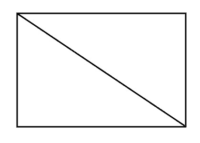
[a] ½ [b] 1/3 [c] 1/4
15. CIRCLE =
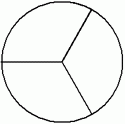
[a] ½ [b] 1/3 [c] 1/4
SECTION B INSTRUCTION – Attempt all the answer.
QUESTION 1 Simple addition and subtraction.
T U
2 5
+ 4 2
____________
T U
5 1
+ 3 6
_____________
T U
7 3
– 1 6
___________
T U
9 9
– 5 7
_______________
QUESTION 2
a. Share 40 mangoes equally among 4 pupils.
b. 3 /4 of 28 bicycles =
c. 3/4 of 20 pencils =
d. Copy and write true or false.
i. 74 > 47 ________
ii. 12 < 12 ________
QUESTION 3 Write these in numbers and words.
a. Seventy – seven = ________
b. One hundred and five = ________
c. 50 = ________
d. 100 = ________
QUESTION 4 Complete the sequence.
a. 8, 10 ,_____, 14, _____, _____, _____
b. 12, 15, 18, _____, _____, _____, _____
c. 185, _____, _____ 188, _____, _____
d. 15, 20, _____, 30, _____, _____, _____
Basic 2/Primary 2 Quantitative Reasoning Examination Question for First Term
INSTRUCTION – Fill in the correct answers.
Add the smallest and biggest number together.
For example – 4, 5, 7, 16
4 + 16 = 20
1. 6, 7, 8, 18
2. 13, 16, 18, 14
3. 45, 46, 1, 33
4. 12, 23, 33, 22
5. 3, 8, 4, 7
Subtract the smallest number from the biggest number.
For example – 16, 10, 40, 50
50 – 10 = 40
6. 100, 101, 110, 120
7. 16, 17, 61, 71
8. 1, 2, 3, 4
9. 20, 16, 17, 30
10. 400, 200, 300, 100
Mark out the biggest number, e.g 4, 2, 16, 17, 20.
11. 120, 140, 160, 180, 200
12. 141, 121, 131, 241, 111
13. 431, 413, 162, 126, 110
14.. 26, 36, 34, 43, 51
15. 200, 400, 700, 100, 900
4. Mark out the smallest number, e.g 33, 21, 44, 12, 2.
16. 10 12 16 20 13
17. 33 21 44 66 211
18. 200 150 110 120 89
19. 12 13 100 50 51
20. 98, 63, 56, 22, 99
5. Counting in 2s, e.g – 14, 16, 18, 20, 22.
21. 60 _____ 64 _____ 68 _____
22. 80 _____ 84 _____ 88 _____
23. 100 _____ 104 _____ 108 _____
24. 12 14 _____ 18 _____
25. 77 _____ _____ _____ 85
Basic 2/Primary 2 Yoruba Examination Question for First Term
INSTRUCTION – Answer all the questions. Choose the correct answer from the options A – B.
KILASSI: OLODUN KEJI (BASIC TWO (2) )
SUBJECT: YORUBA
DAHUN AWON IBEERE WONYI
- __________ wa lara awon nnkan ti o wa ni ayinka ile – iwe (a) tabili (b) obe
- Oluko maa nko ise si oju _________ (a) eniyan (b) patako ikowe
- _______ se pataki fun omoluabi (a) ole jija (b) ikini
- _______ ni a maa nlo lati gba ile (a) iwe (b) igbale
- Itoju ile ati ayika se pataki (a) beeko (b) beeni
Iru ayeye wo ni a ti maa nki eniyan bayi:
- Oye amori o (a) igbeyawo (b) oye
- omo atoloruko o (a) isomoloruko (b) isinku agba
- Eyin iyawo o ni mo eni o (a) odun (b) igbeyawo
- E kaaro ni o maa nki eniyan ni ________ (a) ale (b) aaro
- Bawo la se nkini ni osan? (a) e kaale o (b) e kaasan o
- ______ ni ohun elo itoju ile ati ayika (a) igbale (b) pensulu
- Kini eejila ni figo (a) 20 (b) 12
- ________ je eranko elese merin (a) aja (b) eye
- Ewo ni faweli aranmupe (a) gb (b) en
- Iro melo lo wa ninu alifabeeti yoruba: (a) 20 – Ogun (b) 25 – Aarundilogbon
- Kini 10 ni onka yoruba? (a) ookan (b) Eewa
- Silebu ni ege oro si __________ (a) orikerike (b) ibusun
- Pari orin yi “Ohun melo nile iwe fi nwu o”? (a) ohun meta (b) ohun meji
- Ewure je eran ______ (a) ile (b) igbo
- O dara lati ran obi wa lowo (a) beeni (b) beeko
Yoruba Objectives (OBJ) Answers
1.A
2.B
3.B
4.B
5.B
6.B
7.A
8.B
9.B
10.B
11.A
12.B
13.A
14.B
15.B
16.B
17.A
18.A
19.A
20.A
IPIN KEJI – Pin awon oro wonyi si silebu
1. Eleran
2. adesola
3. Omode
4. Koroba
5. Silebu
AKAYE
Jide je omo onipanle ati alaigboran.Kii f’eti sile si ohun ti awon obi re ba n so. Opo igba ni yio kuro nile ti ko si ni lo si ile-iwe. Ojo ti o ba si jaja lo si ile- iwe, ko ni teti si ohun ti oluko re n hoo o feran lati ma sere pupo, ko ni ero miran ju ki o sere, ki o si jeun. Nigbati o di akoko Idanwo ni ile eko , ko kawe ere ni o se kiri. Nigbati o fidiremi leyi ti awon egbe re ti o foju s’eko yege ninu idanwo
IBEERE
1. Tani omo onipanle? (a) Bola (b) Dele (d) Dide
2. Nibo ni o ye ko lo ti oba kuro nile? (a) Ile ijosin (b) ile-ofin (d) ile-iwe
3. kin-ni jide feran lati ma a se? (a) Ere (b) Jale (d) Sokun
4. Akoko wo ni ko kawe? (a) Akoko ebi (b) Akoko idanwo (d) N ko mo
5. Kin-ni o sele si I ni igbeyin? (a) O yege (b) O fidi remi (d) O di olowo
THEORY
1. Ko oro oruko Meta
FA’LA SI ORO ORUKO to’wa ninu awon gbolohun
2. Dele ra moto titun
3. Ibadan ni gbogbo wa n gbe
4. Mo n fo aso ati gele
Verbal Reasoning Primary 2 Examination Question for First Term
INSTRUCTION – Answer all the questions. Choose the correct answer from the options A – C.
SECTION A : Fill in the missing vowels in the given words
COMPLETION OF WORD WITH MISSING VOWELS

How many consonants are in the given words
(1) BOOK = __________________ (2) NOTE = ________________ (3) BELT = _________________
(4) CLASS = _________________ (5) TEACH = __________________
Re0arrangement of three letter words to form new words
(1) WAS = (A) SWA (B) AWS (C) SAW (2) RAW = (A) ARW (B) WAR (C) RWA
(3) PUS = (A) USP 9B) SUP (C) PSU (4) EAT = (A0 EST (B) TEN (C) TEA (5) GEL = (A) LGE (B) LEG
SECTION B : The use of number codes to represent letters


