JSS2 Examination Questions For Second Term
Junior Secondary School Questions 2nd term. Basic 8/JSS2 Examination Questions and answers for second term Obj & Theory-Edudelight Exam
Agricultural Science JSS2 Examination Questions For Second Term
SECTION A – OBJECTIVE
- Agriculture provides all these benefits except ______ (a) food (b) minerals (c) clothing (d) shelter
- The loosening of soil for easy penetration of the roots to allow air and water in the soil is _____ (a) planting (b) stumping (c) ridging (d) forage
- The sum total sum of food required by an animal for a day is ____ (a) ration (b) fodder (c) concentrate (d) forage
- Organisms that cause disease on crops or farm animals are referred to as _____ (a) nematode (b) fungus (c) virus (d) pathogen
- Which of the following is a source of minerals on animal feed? (a) bone meal (b) palm kernel cake (c) blood meal (d) groundnut
- A young or baby goat is called _____ (a) piglet (b) weather (c) kid (d) calf
- A parasite is an organism living in or on another organism called ____ (a) associate (b) host (c) endo-parasite (d) food
- The following agricultural products can be canned except _____ (a) beans (b) meat (c) fish (d) hide
- The system of a flowering plant which usually grow below the soil is ___ system (a) fruit (b) root (c) short (d) flowering
- The farm structure which is cylindrical in shape and made of aluminum material is called _____ (a) silo (b) rhombus (c) cribs (d) barn
- Which of the following has the highest concentration of vitamins? (a) pumpkin (b) pawpaw (c) banana (d) grape fruit
- A secateurs is a tools used for _____ (a) felling tree (b) loosening (c) pruning (d) planting seeds
- The following are obtained from tree except _____ (a) gums (b) wool (c) dyes (d) lobster
- Staking is practice which is beneficial to one of the following crops (a) yam and pumpkin (b) cocoa and yam (c) tobacco and rice (d) rice and wheat
- All of the following are shell fish except ______ (a) crabs (b) crayfish (c) oyster (d) lobster
- Cocoa is a chocolate as groundnut is to ______ (a) garri (b) tea (c) oil (d) ogi
- The following factors that affect geographical distribution of farm animals in Nigeria except ______ (a) rainfall (b) nutrition (c) pleasure (d) religion
- Harvesting of fish on a large scale involves the use of _____ (a) spear (b) harvester (c) gourds (d) nets
- Yam tubes are stored in a _____ (a) barns (b) silos (c) rhombus (d) cribs
- Which of the following plants has pseudo stem? (a) cocoa (b) orange (c) cashew (d) banana
- The binding together of stock and scion of two related plants to form one single plant is called _____ (a) budding (b) cutting (c) grafting (d) layering
- Ammonium nitrate supplies _____ to the soil (a) ammonia (b) nitrogen (c) hydrogen (d) potassium
- Which of the following is responsible for the decomposition of organic matter? (a) parent material (b) temperature (c) vegetation (d) living organism
- The skeleton of bony fishes is made up of _____ (a) bones (b) cartilages (c) ivory (d) wood
- A disease transmitted by tsetse fly is called ______ (a) coccidiosis (b) brucellosis (c) trypanosomasis (d) tuberculosis
- Rabbit are best housed in a structure known as _____ (a) ponds (b) hutches (c) houses (d) pens
- During pollination, pollen grains are carried from anther to the ____ (a) leaves (b) roots (c) stigma (d) stem
- The career opportunities available for agriculture graduates includes the following except ____ (a) motor assembly (b) researcher (c) teaching (d) private learning
- Hay and silage are examples of ______ feed (a) concentrate (b) supplemenmt (c) basal (d) roughness
- The incubation period of a hen is _____ days (a) 21 (b) 22 (c) 23 (d) 24
- _____ is used for feeding the animals with hay and other forage? (a) feed troughs (b) feed bunks (c) hay racks (d) self feeder
- _____ are used for feeding grain and silage (a) feed troughs (b) feed racks (c) hay racks (d) self feeder
- _____ are mainly used for patterning cattle (a) feed bunks (b) feed troughs (c) hay racks (d) self feeders
- The following are the main sources of water supply for cattle except ____ (a) wells (b) springs (c) ocean (d) streams
- Animal feeds can be classified into _____ main groups (a) two (b) three (c) four (d) five
- Yams, cassava, potato, belongs to _____ feed nutrient (a) fats (b) protein (c) minerals (d) carbohydrates (d) protein
- _____ contain a high proportion of nutrients and a low proportion of fibre and water (a) roughages (b) concentrate (c) succulent (d) minerals
- Milk, groundnuts, cotton seeds belongs to _____ feed nutrients (a) minerals (b) fats (c) carbohydrates (d) protein
- _____ are very low in protein? (a) Roughages (b) Succulent (c) concentrate (d) fats
- _____ have high water content? (a) Roughages (b) Concentrate (c) Vitamins (d) Succulent
Agricultural Science Exam Questions Objectives (OBJ) Answers
1.B 2.B 3.A 4.D 5.B 6.C 7.B 8.D 9.B
10.B 11.D 12.C 13.D 14.A 15.A 16.C 17.B
18.D 19.A 20.D 21.C 22.B 23.B 24.B 25.C
26.B 27.A 28.A 29.D 30.A 31.A 32.A 33.B
34.A 35.B 36.D 37.B 38.D 39.A 40.C
SECTION B ANSWER ALL
1A. State the meaning of feed / feeding. B. List any five (5) type of feed stuffs
2A. Mention three (3) feeding tools B. Identify three
3A. Feed nutrients . B. Classify the three (3) major feeds that we have
4. State three (3) factors to be considered before deciding animal feeds
Basic Science JSS2 Examination Questions For Second Term
SECTIONA: Instruction: Answer all questions
- ____ is the process by which food substances are broken down into simple and soluble form that absorbed into the body (a) egestion (b) digestion (c) excretion
- All the parts of the body which work together to ensure digestion of food are called the _____ system (a) digestive (b) excretive (c) food web
- ____ is the taking in of food into the mouth (a) egestion (b) ingestion (c) excretion
- ____ is the process whereby undigested food is removed as faeces through the anus from the body (a) absorption (b) ingestion (c) egestion
- At the end of the digestion all end products, vitamins, salts and water are absorbed in the __intestine (a) small (b) big (c)large
- The____intestine absorbs any water in the waste materials (a) large (b) small (c) big
- The hard waste (faeces) is passed out through the___(a) intestine (b) canal (c) anus
- ____ is the process by which an organism gets rid of metabolic waste products from the body (a) digestion (b) excretion (c) respiratory
- ____ is the removal of Carbondioxide and water produced during respiration (a) ingestion (b) excretion (c) egestion
- Removal of undigested food (faeces) is not excretion, it is___(a) ingestion (b) absorption (c) egestion
- _____ is the urinary system with two bean-shaped organs located in the abdominal region of the body. (a) esophagus (b) kidney (c) liver
- Urine contains 96% water, 2% salt and 2% urea (a) true (b) false (c) maybe
- _____ is the external part of the body and protects the inner structures (a) layer (b) kidney (c) skin
- The waste gases such as carbon (iv) oxide and water vapour are sent out into atmosphere through the___ (a) lungs (b) liver (c) kidney
- The largest internal organ of the human body that performs more than 500 different functions is called____(a) liver (b) kidney (c) skin
- Wastes accumulate in the body and cannot poison or destroy the body? (a) true (b) false
- ____ is a series of orderly changes by which a living thing comes into maturity (a) maturity (b) changes (c) development (d) growth
- ____ change can be determined by measure of height and weight at time intervals (a) growth (b) development (c) change (d) skills
- _____ changes can be observed by appearance of certain characteristics features and capabilities. (a) growth (b) developmental (c) change (d) skills
- _____ is period of dramatic growth which last from birth to around two years (a) juvenile (b) infancy (c) puberty
- ____ is the transition stage from childhood to adolescence (a) adolescence (b) infancy (c) puberty
- _____ is the stage of full maturity. It is often noted when a person is considered chronologically, legally and behaviorally ready to hold responsibilities (a) adolescence (b) infancy (c) puberty (d) adulthood
- ____ changes may naturally disappear after some time and also be corrected medically or by change in behavior (a) permanent (b) temporary
- _____ changes that remain for life and are not reversible. (a) permanent (b) temporary
- Which one is not factors affecting growth and development? (a) diseases (b) food (c) death
- Growth in plants is restricted to special areas (a) true (b) false
- Growth in animals is not restricted to special areas (a) true (b) false
- _____ is a very important factor which influences human growth and development (a) love (b) sex (c) diseases
- ___ play an important role in the transmission of physical and social characteristics from parents to off-springs (a) sex (b) socioeconomic (c) hereditary
- ____ are a large number of endocrine glands present inside our body (a) liver (b) hormones (c) genes (d) organs
- Growth in plants is restricted to special areas as the —– tissues at the root tip and shoot apices. A. meristemic B. systemic C. mesoric D. impulsive
- – is used to measure the growth in plant and in animal is weighing scale. A. Auxanometer B. anaemometer C. basketmometer D. humidity
- —— in plants is directly influenced by such external factors as sunlight, temperature, humidity, gravity etc. A. Growth B. Development C. Temperature D. Pressure
- Growth in—— is usually not directly influenced by such external factors. A. animals B. plants C. tree D. being
- Growth is —– while development is qualitative. A. quantitative B. qualitative C. all of the above D. none of the above
- The first period of rapid growth is from A. Ten to seventeen years’ B. birth to about two years C. four to ten years D. seven to nine
- Development takes place in the body when A. There is increase in size B. the body sizes to grow C. the body is able to perform particular function D. The moves expectedly
- Maturity sets in a man at the age of A. 30yrs B. 21yrs C. 25yrs D. 12yrs
- The process whereby green plants manufacture their food in the presence of sunlight is known as___(a) food web (b) photosynthesis (c) food chain
- The roles of bacteria in the nutrient Circle is to help with the _______ of Organisms (à) resurrection (b) decomposition (c) purification
Basic Science Exam Questions Objectives (OBJ) Answers
1.B 2.A 3.B 4.C 5.A 6.A 7.C 8.B 9.B
10.C 11.B 12.A 13.C 14.A 15.A 16.B 17.C
18.A 19.B 20.B 21.C 22.D 23.B 24.A 25.C
26.A 27.A 28.B 29.C 30.B 31.A 32.A 33.A
34.A 35.A 36.B 37.A 38.B 39.B 40.B
SECTION B THEORY ANSWER 2 QUESTION
- Explain Adolescents, Food web and food chain
b. Define the following terms: i. Digestive system Work ii. Excretory system iii. Growth
- Define Ecosystem 4. What is Abstinence?
5. Explain the meaning of Rusting
Basic Technology JSS2 Examination Questions For Second Term
SECTION A: Instruction: Answer all questions
- The line that divide quadrilateral into two equal part triangles is known as ___________ (a) triangle (b) plane figure (c) diagonal (d) polygon
- Decagon has ______ sides (a) 10 (b) 8 (c) 2 (d) 5
- _______ is a plane figure formed by joining three or more straight sides (a) heptagon (b) polygon (c) rectangle (d) squaregon
- When a plain figure is drawn, it occupies a certain amount of ____ (a) space (b) time (c) money (d) property
- Irregular lines and curves are drawn with _______ (a) compass (b) French curves (c) protractors (d) ruler
- A square is a plain figure bounded by _______ equal sides (a) 5 (b) 4 (c) 8 (d) 1
- __________ is a quadrilateral with four sides and four right angles (a) square (b) rectangle (c) polygon (d) triangle
- The four angles of a quadrilateral sum up to ______ (a) 190 (b) 3600 (c) 1800 (d) 1500
- All these are examples of quadrilateral except _______________ (a) square (b) rhombus (c) heptagon (d) none
- A regular polygon can either be ______ (a) equal (b) irregular and regular (c) regular and different (d) anyhow
- A regular polygon is one that has all its _______ (a) side equal (b) different sides (c) sides longer than each other (d) only one side longer
- ________ is a polygon with one equal sides (a)irregular polygon (b) rhombus (c) regular polygon
- ________ are tools held by hand for use in the workshop (a) marking tools (b) hand tools (c) cutting tools (d) sliding tools
- The categorized measuring tools are these except _______ (a) marking out tools and drilling tools (b) fighting tools (c) cutting tools and driving tools (d) essential tools
- A polygon is said to be __ if all it sides are equal and it angles are equal (a) equilateral (b) angle
- Which of these is not a type of wood work machine (a) saw (b) hammer (c) clippers (d) spanner
- A polygon with six sides is ______ (a) heptagon (b) octagon (c) hexagon (d) nonagon
- Measuring tools are used for measuring ________ (a) lengths (b) widths (c) size (d) space
- ___________ is a straight line drawn through the centre of a circle (a) chord (b) tangent (c) diameter (d) circle
- The part of a circle bounded by two radius which are light angles to each other is called _____ (a) segment (b) tangent (c) quadrilateral (d) cogent
- Tangent is usually formed _______ the centre (a) inside (b) outside (c) beside (d) top
- A pentagon is a polygon with ______ sides (a) 4 (b) 5 (c) 2 (d) 8
- The line that join two opposite corners is called _____________ (a) diagonal (b) polygon (c) diameter
- The quadrilateral with only two parallel side is _____________ (a) rhombus (b) trapezium (c) square (d) triangle
- The diagonals of a rhombus bisect each other at _____ (a) 800 (b) 1800 (c) 900 (d) 400
- Parallelogram is a plane figure with ________ sides (a) 9 (b) 4 (c) 8 (d) 6
- The type of metal which contains iron is known as ___________ (a) alloy metal (b) ferrous (c) nonferrous metal
- Which of the following is used to prevent hand against electric shock? (a) leather glove (b) rubber glove (c) cotton glove (d) iron glove
- Which of these tools is ideal for recovering slight irregularities from flat metal surface? (a) chisel (b) scrapper (c) hack saw (d) hammer
- The following can be used for cutting metal to size except ________ (a) chisel (b) power saw (d) knife
Basic Science Exam Questions Objectives (OBJ) Answers
1.C 2.A 3.A 4.A 5.B 6.B 7.A 8.B 9.D
10.C 11.A 12.A 13.B 14.B 15.A 16.D 17.C
18.A 19.C 20.A 21.C 22.B 23.C 24.A 25.D
26.B 27.B 28.B 29.D 30.B
SECTION B THEORY ANSWER ALL QUESTIONS
- (A) Define the term “Bisection”
(B)Mention five (5) parts of a circle or regular polygons
- (A) What is Angles?
(B) List and explain types of angles
3. State five ways by which we can maintain metal work machines in the laboratory
4a. Define Lines
4b. List three (3) types of lines
5. List three (3) uses of lines
5b. Define polygons and explain types of polygons
Business Studies JSS2 Examination Questions For Second Term
SECTION A: Instruction: Answer all question
- Ethnics of book – keeping includes all except _____ (a) sincerity (b) confidentiality (c) fraud (d) honesty
- Qualities of a good book keeper includes one of the following except _____ (a) integrity (b) honesty (c) dubiety (d) decency
- Impulse buying means _____ (a) impromptu buying (b) buying without payment (c) buying with ease (d) buying without discount
- Which of the following is not the responsibility of the personnel department? (a) staff welfare and conditions (b) staff recruitment (c) stock control (d) training (e) promotions and transfers
- Which of the departments is responsible for the keeping of financial records of a business organization (a) purchasing (b) administration (c) accounts (d) personnel
- The following are the functions of the production departments except ______ (a) making sure that goods of high quality are produced in time (b) ensuring that raw materials are available when needed (c) safety of factory (d) maintenance of repairs of machine (d) settlement of workers disputes
- Which of the following is not a function performed by the sales department? (a) keeping records of goods in the warehouse (b) looking for new customers for the business (c) taking care of business bank accounts (d) delivery of goods ordered by customers (e) working closely with the production department
- As a businessman, you wish o supply cartons of mineral water to a company. The department of the company you will contact is _____ department (a) research (b) accounting (c) purchasing (d) personnel (e) transport
- A pair of direct services from among these is _____ (a) commerce and agriculture (b) construction and manufacturing (c) extraction and construction (d) manufacturing and extraction (e) teaching and tailoring
- A factor of production that makes business run effectively for a reward of interest is ____ (a) capital (b) entrepreneur (c) labour (d) land (e) wealth
- All of the following are examples of home trade except trade between _____ (a) Ibadan and Lagos (b)Akwa Ibom state and Kaduna state (c) Port Harcourt and London (d) Abuja and Sokoto
- ______ is the situation where there is openness in carrying out one duty without doubt (a) transparency (b) corruption (c) accountability (d) probity
- _____ implies the ability of an individual’s to b responsible for his action (a) corruption (b) transparency (c) probity (d) accountability
- _____ is the act of doing something according to laid down rules or procedures (a) corruption (b) due process (c) transparency (d) probity
- The following are the attributes of due process except ______ (a) truthfulness (b) openness (b) fairness (d) corruption
- ______ are extra service made available to a customer after the purchase of the product (a) discount (b) opportunity (c) after sale service (d) public service
- ______ are goods and services which we cannot do without (a) needle (b) needs (c) goods (d) vehicle
- The basic needs of life are these except _____ (a) food (b) shelter (c) clothing (d) vehicle
- Goods and services which we desire but can do without is known as _____ (a) wants (b) needs (c) export (d) import
- ______ are acceptable ways or mode of behaviour for book – keepers and accountant (a) accounting (b) book – keeping ethics (c) transparency (d) probity
- Book – keeping ethnics are these except ______ (a) accountability (b) transparency (c) responsibility (d) probity
- Oral communication can be made through ______ (a) telephone (b) business reply (c) telegram (d) telex
- All but one of the following is not a duty of a receptionist (a) receiving and directing visitors (b) attending to friends (c) receiving messages from callers (d) handling of telephone calls
- Which of these will you recommend to an office for the storage of document? (a) chest (b) cupboard (c) filling cabinet (d) locker (e) table tray
- Madam Alice Nigeria Limited receives a phone call. The receptionist said on the phone “Hello, who is speaking”? What is wrong with this response? The receptionist (a) did not identify the company (b) needs to have asked for the name of the caller (c) refused to disclose her home town (d) should have shouted (e) should have spoken
- Another name for sales ledger is _____ ledger (a) creditors (b) debtors (c) general (d) personal
- Another name for purchases ledger is _____ ledger (a) debtors (b) creditors (c) general (d) personal
- Those who buy in large quantities from producers are called _____ (a) consumers (b) hawkers (c) manufacturers (d) retailers (e) wholesalers
- ______ are legal, societal or ethics principles of freedom or entitlement (a) claim (b) right (c) duties (d) moral
- What is the full meaning of “DR” in book keeping? (a) doctor (b) Debit (c) Debtor (d) Dear
- ______ is an evidence of payment (a) cash book (b) receipt (c) an invoice (d) credit note
- Petty cash book is used to record ______ (a) bank transaction (b) goods bought on credit (c) credit sales (d) minor expense
- Which of the office do we receive visitors in an organization? (a) mail office (b) personnel office (c) reception office (d) account office
- The officer in charge of petty cash book is called ______ (a) manger (b) accountant (c) cashier (d) petty cashier
- The principal book of account is called _____ (a) ledger (b) journal (c) cash book (d) cheque
- Which of the document is handled by a receptionist? (a) sales book (b) account book (c) visitors book (d) minute book
- A trader who carries his goods from one place to another is called _____ (a) a trader (b) a carrier (c) an entrepreneur (d) a hawker
- A place where goods are stored until they are needed is known as ______ (a) bank (b) house (c) room (d) warehouse
- In an office the amount to start a petty cash system is known as _____ (a) capital (b) profit (c) expenses (d) asset (d) float
- The left hand side of the cash book is known as ______ (a) debit side (b) credit side (c) creditor side (d) debtor side
- The following are components of a ledger except _____ (a) amount (b) date (c) folio (d) particulars (e) net profit
- The following are columns in petty cash book except _____ (a) discount (b) postage stamp (c) stationary (d) telephone
- Letters coming into an organization from other firms are referred to as _____ mail (a) incoming (b) outgoing (c) air (d) inland
- The end point in the channel of distribution of goods is _____ (a) consumer (b) manufacturers (c) middlemen (d) retailer
- A cash book has _____ columns (a) credit and debit (b) balance sheet (c) ledger (d) none of the above
- One of the qualities of a clerk is ______ (a) impatience (b) obedient (c) lateness (d) unreliable (e) rudeness
- Which side of the cash book is payment side? (a) central side (b) right hand side (c) left hand side (d) both left and right
- The head of a purchasing department is ______ (a) chief accountant (b) head of department (c) sales manager (d) personnel manager (e) purchasing manager
- Moving goods from Nigeria to Ghana is called ______ (a) export trade (b) entreport (c) import trade (d) foreign trade
- A telephone operator is an office must be _____ (a) aggressive (b) polite (c) kind (d) neat (e) import trade
- A trader that buys in large quantity and sells in smaller quantity to the retailer is called ____ (a) retailer (b) wholesaler (c) marketer (d) customers
- The ledger account that records the person account is known as _____ (a) personal (b) impersonal (c) nominal (d) real
- A trader buys goods at
N250.00 and sells the goods atN400.00. What is the profit? (a)N250.00 (b)N650.00 (c)N150.00 (d)N500.00 - Which of the following jobs is against the law of Nigeria? (a) fanning (b) teaching (c) smuggling (d) fishing
- _____ is made up of cash column, bank and discount column on both sides of the cash book (a) single cash book (b) double column cash book (c) three column cash book (d) petty cash book
- Which of the following office equipment is not electrically operated? (a) typewriter (b) perforator (c) calculating machine (d) photocopying
- The movement of people and goods from one place to another is called _____ (a) communication (b) transportation (c) banking (d) advertising
- The following are the functions performed in an office except _____ (a) giving information (b) processing information (c) parenting information (d) recording information
- The abbreviation of “REF” means ________ (a) referendum (b) read form (c) relevant (d) reference
- Aids to trade are those activities that facilitate ______ (a) communication (b) buying and selling (c) advertising (d) consumer
Business Studies Exam Questions Objectives (OBJ) Answers
1.C 2.A 3.A 4.C 5.C 6.D 7.B 8.E 9.E
10.A 11.C 12.A 13.D 14.D 15.D 16.C 17.B
18.D 19.A 20.B 21.C 22.A 23.B 24.C 25.A
26.B 27.B 28.E 29.B 30.B 31.B 32.D 33.C
34.D 35.A 36.C 37.D 38.D 39.D 40.A 41.E
42.A 43.A 44.A 45.A 46.B 47.C 48.E 49.A
50.B 51.B 52.A 53.C 54.C 55.C 56.A 57.B 58C 59.A 60.B
SECTION B THEORY (30 marks)
- Explain Consumer Right
b. List eight (8) universal consumer right (10 marks)
- Briefly write on these words: (i) Needs (ii) Wants (iii) Impulse Buying (iv) After sale services (10 marks)
- What is Book – keeping Ethnics?
b. Give the full meaning of “TAP” and explain (10 marks )
JSS2 CCA Examination Questions For Second Term
SECTION A: OBJECTIVES. Answer all question
- _____is a well lit work room for an artist (a) studio (b) artist (c) engraving (d) caricature
- ___is the pigment used for painting in order to add more beauty to things.(a) value (b) colour (c) line (d) form
- ____is to make permanent mark on the body (a) tattoo (b) realism (c) loom (d) tempera
- A serious play with a tragic end is known as (a) comedy (b) tragedy (c) dance drama (d) musical drama
- ___and____ are secondary colour (a) yellow,blue (b) green,purple (c) blue,red (d) orange,yellow
- Drama is a means of _____(a) music (b) movies (c) self-expression (d) state place
- In dramatic art, rehearsal is also called___(a) practice (b) drama (c) repetition (d) play
- Which of these doesn’t belong to the group (a) charcoal (b) pencil (c) crayon (d) water colour
- ____are mixture of two primary colour in equal proportion (a) repetition (b) tertiary color (c) secondary colour (d) December colour
- Sound is produced in trumpet by ____(a) plucking (b) shaking (c) blowing (d) beating
- Costume is very essential in one of the following (a) dancing (b) drama (c) drawing (d) ceramic
- Irregular sound is called_____(a) noise (b) vibration (c) music (d) sound
- Reading, movement, acting and expression are the activities involved in (a) playing (b) rehearsal (c) singing (d) drama
- Trumpet is an instrument that belongs to the_____family (a) string (b) chordophone (c) wood-wing (d) membranophone
- Another name given to colour is (a) hue (b) tone (c) primary color (d) poster colour
- A self-sounding instrument is also known as (a) Aeroplane (b) idio-phone (c) chordophone (d) membranophone
- Black and white are _____colours (a) dull (b) good (c) tertiary (d) neutral
- Principle of choreography are written below except (a) fatness (b) movement (c) rhythm (d) space
- Those that are well trained in music are called ____(a) soloist (b) choirs (c) solo performance (d) art composer
- The person that writes a play for drama presentation is called (a) Writer (b) Playwriter (c) Producer (d) Playwright
- A recorder belongs to_____ family (a) wind (b) woodwind (c) brass (d) flute
- _____is the art of creating and performing a dance (a) choreography (b) oceanography (c) cathography (d) photography
- The following instrument are brass instrument except one (a) trombone (b) xylophone (c) trumpet (d) cornet
- One of the following is an activity in a rehearsal (a) parading (b) defending (c) fencing (d) blocking
- Written word that direct activities is called a____(a) booklet (b) novel (c) manual (d) script
- Clothing and accessories worn on stage are called_____ (a) make-up (b) costume (c) dresses (d) materials
- Eye pencil, brush, lipstick are examples of__(a) costumes (b) saloon (c) make-up (d) all of the above
- One of the material resist water (a) crayon (b) charcoal (c) chalk (d) postal
- A choreographer is someone who_____(a) evaluate dancers (b) protect dancers (c) teaches dancers (d) reprimand dancers
- Art is_____(a) ability to paint (b) ability to perform (c) creative expression (d) creative performance
SECTION B: THEORY Answer 3 question
1a. What is Dance?
1b. What is Craft?
2a. List out three (3) purpose of Rehearsal
2b. Define Rehearsal
3a. What are Musical Instrument?
3b. What is Painting?
4a. List out five (5) types of local craft business
4b. List out the activities involved in rehearsal
CCA Exam Questions Objectives (OBJ) Answers
1.A 2.B 3.A 4.B 5.B
6.C 7.A 8.B 9.C 10.C
11.B 12.A 13.D 14.C 15.A
16.B 17.D 18.A 19.D 20.D
21.B 22.A 23.B 24.D 25.D
26.B 27.C 28.A 29.C 30.C
JSS2 Civic Education Examination Questions For Second Term
SECTION A – OBJECTIVE ANSWER ALL QUESTIONS
- One of the steps for the protection of human rights is ________ (a) good military government (b) independence of the judiciary (c) clamp down on the press (d) all of the above
- the people of integrity in society will help in the following ways except ______ (a) develop politically, economically and socially (a) develop politically, economically and socially (b) live peacefully with each other (c) fight the members always (d) be seen as models to be emulated
- court where cases are tried according to Islamic laws is called _______ (a) high court (b) customary court (c) court of appeal (d) Sharia court
- Which of the following is strategy for promoting acceptable behaviour in people? (a) the teaching of moral education in schools (b) encouraging people to attend night club (c) encouraging people to do wrong (d) encouraging students to watch films always
- The process of people or supporters using force or intimidation to falsify the election result is known as _______ (a) bribery (b) thurgery (c) deceitful (d) corruption
- The process of electing representatives of the people to lead or into the government of a state is known as _______ (a) voter (b) elect (c) voting (d) rule
- In Nigeria, the court whose decisions are unquestionable and final is _____ (a) the superior court (b) the allelic court (c) court of appeal (d) the supreme court
- The leader of the house of representatives is the ______ (a) senate (b) speaker (c) president (d) deputy
- All these are the types of constitution except _______ (a)federal government (b) state constitution (c) unitary constitution (d) unwritten constitution
- A documents that spells out the law and the forms of operations of a government is _____ (a) constitution (b) election (c) population (d) government
- _______ is the oldest form of local government in Lagos state (a) Apapa (b) Ikeja (c) Alimosho (d) Lagos – island
- ______ is the best form of leadership (a) authority (b) theocracy (c) federation (d) democracy
- The agency in charge of drugs and related offences is the _______ (a) EFCC (b) NDLEA (c) SSS (d) PHCN
- Which of the following types of government is closest to the rural community? (a) local government (b) regional government (c) state government (d) federal government
- Judiciary is the arm of government whose aim is to ______ (a) make law (b) decide the law (c) cal the law (d) interprets the law
- The organ that is responsible for the implementation of policies and laws made in the country is called ________ (a) executive (b) legislature (c) judiciary (d) rule of law
- All these are the forms of democracy except _______ (a) direct democracy (b) indirect democracy (c) customary democracy (d) constitution democracy
- ________ institutions are headed by Obi’s Emirs, and Obas (a) economic (b) legal (c) traditional (d) political
- An offence in which a person is accused of publishing a false information to another individual is called _______ (a) slander (b) murder (c) gun running (d) bunkering
- The following are the duties to be performed by the citizens of a country except ______ (a) destroying government properties (b) obeying law and order (c) payment of taxes (d) show loyalty
- A person who refuses to be drunk with his/her friends is said to demonstrates ______ (a) mismanagement (b) integrity (c) uprightness (d) disloyalty
- When a citizen stands as a witness in the court, such citizen is performing a type of right called _______ (a) economic right (b) civil right (c) cultural right (d) civic right
- Democracy is best illustrated by the principle of _______ (a) rule of law (b) majority rule (c) equality (d) minority
- _______ is the punishment and corrective measure used to correct crime (a) honesty (b) indiscipline (c) sanction (d) disobedience
- A situation in which people come together from different cultural ethnic groupings to merge as an entity under one nation with central government is called _______ (a) kingdom (b) federation (c) patriotism (d) protectorates
- The following are the importance of integrity except ______ (a) it promotes upright judgment in everything (b) it helps to eliminate corruption (c) it hinders people’s progress (d) it gives room to good character
- The consequences of lack of right attitude to work is ______ (a) innovation and invention (b) productivity and increase (c) production and increase (d) declining and indiscipline
- Every individual is entitled to these basic human rights except ______ (a) right to robbery (b) right to dignity (c) right to fair hearing (d) right to life
- All these are pillars of democracy except _____ (a) rule of law (b) political parties (c) people (d) constitution
- An autocratic leader is one who _____ (a) to listens to his in making decisions (b) considers the law of the land (c) takes decisions alone (d) considers is followers in ruling
- Which one is not a constructing factor to the success of democracy in any country? (a) rule of law (b) fighting opposition (c) tolerating opposition (d) mass media
- The act of stealing money or persons especially using violence or threat is called _____ (a) cheating (b) malpractices (c) robbery (d) envy
- The acceptable way a worker is expected to carry out his/her duty is referred to as ____ (a) diligence (b) laziness (c) punctuality (d) right attitude to work
- When there is national security, there will be _____ (a) conflict (b) fear (c) war (d) peace
- The ability to do or decide things by yourself rather than depending on other people for help is ______ (a) self reliance (b) progress (c) co – operation (d) esteem
- For democracy to work in a state, the citizens must have ______ opportunities in an attempt to lead the country in whatever capacity they so desire (a) different (b) equal (c) maximum (d) acquire
- One of the steps for protection of human rights is ______ (a) fighting (b) rude (c) protest marches (d) ruler
- The Nigerian passport is issued by the ______ (a) ministry of home affairs (b) ministry of external affairs (c) ministry of finance (d) ministry of internal affairs
- A good citizen should ______ his/her taxes regularly (a) forge (b) accumulate (c) check (d) pay
- What is the full meaning of W. H. O. ? (a) World Health Organization (b) Wealth Health Organ (c) West Hold Organization (d) World Hill Organization
Civic Education Exam Questions Objectives (OBJ) Answers
1. B 2.C 3.D 4B 5.D 6.C 7.D 8.B 9.B 10.A 11.D 12.D
13.B 14.A 15.D 16.A 17.C 18.C 19.A 20.A 21.B
22.B 23.A 24.C 25.B 26.C 27.D 28.A 29.A 30.C
31.B 32.C 33.D 34.D 35.A 36.B 37.C 38.D 39.A 40.A
SECTION B THEORY PARTS ANSWER THREE (2) QUESTIONS
- Mention three (3) relationships that exist among federal, state and local government , b. (3) Define consumer rights and list 5 rights
- Mention the three (3) arms of government , 3) functions of each
- Explain Law? b. Discuss “The law is no respecter of Persons”
- Define Democracy and state 4 features of democracy
JSS2 Information Examination Questions For Second Term
SECTIONA: Instruction: Answer all questions
- A small symbol that blink on the screen is called ___________ (a) Space bar (b) Pause key (c) Cursor (d) Caps lock
- I. C. T. means _________ (a) Information Construction Technology (b) Information Computer Technology (c) Internal Connection Terms (d) Information Communication Technology
- A special multipurpose electric devices that receive instructions, processes it and produce desired result is ___________ (a) Typewriter (b) Satellite disk (c) Computer (d) Digital camera
- A ____is an entity that stores data needed to be used in a program.________ (a) variable (b) Monitor (c) C P U (d) character
- A ___package is an application that can be used to create and manipulate images on a computer. (a) Output (b) graphics (c) drawing (d) Information
- The name given to all other physical components of a computer is _________ (a) Data (b) Machine (c) Information (d) Peripheral
- A____package produces images that are made up from coloured lines and shapes such as circles, squares and rectangles. (a) drawing (b) painting (c) writing
- There are ________main types of graphics packages (a) 3 (b) 6 (c) 2 (d) 5
- Examples of graphics packages are the following except_____(a) paint brush (b) adobe photoshop (c) Corel draw (d) Microsoft word
- ______is a program you can use to create drawings on a blank canvas or on top of other pictures. (a) Printer (b) Paint (c)Monitor (d) Corel draw
- Which of the following is not an input device (a) Keyboard (b) Mouse (c) Memory card (d) Micro – phone
- R. A. M. means _________ (a) Random Access Memory (b) Random Access Monitor (c) Read Access Memory (d) Read Access Monitor
- ______________ is used to transfer information from computer central processing unit to the computer users (a) Input devices (b) Output device (c) Processing device (d) System unit
- All input device that record image of text picture drawing or special symbol is ___________ (a) Joystick (b) Scanner (c) Printer (d) Keyboard
- Micro – phone is an __________ device while speaker is an __________ device (a) Input Output (b) Output Input (c) Hardware, Software (d) Software, Hardware.
- Processed data is known as ____________ (a) Raw fact (b) Information (c) Telecommunication (d) Communication
- Computer definition must include one of the following (a) electrical (a) electrician (c) digital (d) electronic
- ______is a telecommunications device that permits two or more users to conduct a conversation when they are too far apart to be heard directly. (a) scanner (b) car (c) telephone (d) network
- A pointing device used to control the movement of the cursor is ______ (a) joysticks (b) light pen (c) mouse (d) scanner
- A program design to help in debugging another program is _____ (a) debugging program (b) debugger (c) Debuggest (d) bugger
- D.O.S means _____ (a) disk of system (b) deed of survival (c) disc operating system (d) disc operating service
- ______carries the mobile station (a) the subscriber (b) base station subsystem (c) the network
- The GSM network can be divided into ___broad parts (a) four (b) three (c) two
- COBOL means ______ (a) Communication business language (b) Common business oriented language (c) combined business of Lagos (d) Common basic language
- _____ is a type of translation (a) C P U (b) printer (c) assemble (d) floppy disc
- Programming Language is A set of grammatical rules for instructing a computer to perform specific tasks (a) True (b) False(c) maybe
- FORTRAN mean _____ (a) Formal translator (b) Formula transmission (c) Formula transformer (d) Formal transmitter
- _____is refers to either machine code or assembly language (a) machine (b) low level language (c) high level language
- Another name for starting a computer is _____ (a) Starting (b) On (c) Booting (d) Processing
- Every programming language does consists of some basic elements which are required to make a program (a) False (b) True (c) Maybe
Information Technology Exam Questions Objectives (OBJ) Answers
1. C 2.D 3.C 4.A 5.B 6.D 7.A 8.C 9.D
10.B 11.C 12.C 13.C 14.B 15.A 16.B 17.D
18.C 19.C 20.A 21.C 22.A 23.B 24.B 25.C
26.A 27.A 28.B 29.C 30.A
SECTION B THEORY
ANSWER ALL QUESTIONS
- Define Graphics Package
b. List five (5) examples of graphics packages
- Define Programming language and mention it types
b. I. C. T. stands for what?
c. List eight (8) I. C. T. gadgets
- Define G. S. M
b. Mention five (5) features of G. S. M
JSS2 CRS Examination Question For Second Term
SECTION A – OBJECTIVE
- After wasting his money and feeling the pinch of hunger, the prodigal son applied for a job and was employed to feed _____ (a) pigs (b) goats (c) sheep (d) cows (e) dogs
- When the prodigal son was seen coming home, who ran to hugged and kissed him? (a) his brothers (b) his father (c) his mother (d) his sisters
- In the parable of the prodigal son, one of the following statement was wrong (a) younger son asked for his share of property (b) the elder brother asked for his share of property as well (c) younger son spent money foolishly (d) younger son repented and was forgiven by his father
- Which of the following parables illustrates the Day of Judgment? (a) the sower (c) the wheat and the tears (d) the mustard seeds
- In the parable of the prodigal son, Jesus intended to teach ____ (a) respect for parents (b) God’s love foe a repentant sinners
- Which of the following parable illustrates God’s love? (a) mustard seed (b) wheat and the tears (c) rich man and Lazarus (d) prodigal son
- In the parable of the weed, the enemy who sowed among the wheat was ______ (a) a wicked neighbor (b) the man’s bad servant (c) Satan, the devil (d) the Pharisee
- The man who fell among robbers in the parables of the good Samaritan was going from ______ to ______ (a) Samaritan, Judah (b) Jerusalem, Jericho (c) Capernaum, Bethsaida (d) Antioch, Syria
- Parable are used ______ (a) to confused the ignorant (b) only by religious leaders (c) as windows through which one could understand the deep truth of daily life (d) by the old ones in the bible
- John the Baptist was the _____ of Jesus (a) elder brother (b) disciple (c) forerunner (d) antagonist
- Which angel told Mary that she has been highly favored by the Lord? (a) angel Michael (b) angel Gabriel (c) angel John (d) angel Luke
- The prodigal son begged his father to take him back not as his son anymore but as a _______ (a) hired servant (b) useless boy (c) slave (d) relations
- In an answer to the question of who is one’s neighbor, Jesus told the parable of the ________ (a) sower (b) good Samaritan (c) rich man and Lazarus (d) Prodigal son
- In the parable of the lost coins, Jesus intended to teach _____ (a) diligence and carelessness (b) diligence and carefulness (c) God’s joy for a repentant sinner (d) his dislike for carelessness
- The disciples of Jesus were called Christians because of their _____ (a) selfishness (b) life involvement (c) agility (d) greed (e) kindness
- The teaching of Jesus about swearing was that one should not swear ______ (a) by heaven (b) by earth (c) by angel (d) at all (e) by one’s head
- The wise men who presented Jesus with a gifts at his birth came from the _____ (a) west (b) south (c) East (d) North
- You are the light of the world, a city set at the hill cannot be _____ (a) elevated (b) hidden (c) attacked (d) reduced
- The ability to work well with others is known as ______ (a) satisfaction (b) honesty (c) co – operation (d) loyalty
- One way in which man is still sharing in God’s work of creation is _____ (a) population (b) reproduction (c) conversion (d) co – ordination
- Jesus subjected himself to civil law when he _____ (a) paid tax (b) attended synagogue (c) taught in the synagogue (d) healed the sick
- This prophet was present at the presentation of Jesus (a) Simeon (b) Isaiah (c) Moses (d) John the Baptist
- And she caught by his garment saying “Lie with me” who was this woman? (a) Abraham’s wife (b) Jacob’s wife (c) Pharaoh’s wife (d) Potiphar’s wife
- Joseph’s brothers sold him as a slave to the Ishmaelite out of _____ (a) compassion and care (b) Envy and hatred (c) Shame and sorrow (d) happiness and love
- “I AM THAT I AM”. This was God’s revelation to ______ (a) Cain (b) Adam (c) Moses (d) Abraham
- The first temptation of Jesus Christ was that he should _____ (a) turn stone to bread (b) jump down from a high mountain (c) jump down from the top of a tree (d) turn water to wine
- It took _____ days to creates heaven and earth (a) one (b) two (c) six (d) seven (e) four
- In the parable of the lost sheep, the lost sheep symbolizes _____ (a) rain (b) singer (c) a sinner (d) a student
- When Pharaoh’s daughter saw Moses in the basket. She immediately ______ (a) had pity on him (b) sent for a nurse for him (c) called him Moses (d) called a maid
- Which of these is a parable? (a) the woman with the issue of blood (b) the lost sheep (c) widow of Nain (d) raising of Lazarus
CRS Exam Questions Objectives (OBJ) Answers
1. A 2.B 3.B 4.C 5.B 6.D 7.C 8.B 9.C
10.C 11.B 12.A 13.B 14.C 15.B 16.D 17.C
18.B 19.C 20.B 21.A 22.A 23.B 24.D 25.C
26.A 27.C 28.C 29.B 30.B
SECTION B THEORY ( ANSWER ALL)
1A. What is a Parable?
B. Why does Jesus teach in parable?
C. List the types of parables
2. Narrate the parable of the Kingdom of God.
A. The Sower B. The Wheat and the tares
3A. What is Law?
B. Describe Civil laws and Religious law
JSS2 English Studies Examination Question For Second Term
SECTION A – OBJECTIVE ANSWER ALL QUESTIONS
- _______ consists of a movement of glide from one vowel quality to another (a) monothongs (b) triphthong (c) diphthong
- “She said, “I need to eat something is an example of _____ (a) indirect speech (b) direct speech (c) speech
- Reported speech is also known as _____ speech (a) indirect (b) direct (c) speech
- “My best friend” is an example of _____ writing (a) narrative (b) descriptive (c) expository
- The stressed and unstressed syllable gives the utterance in a kind of rhythmic voice is called _______ (a) tone (b) intonation (c) mood
- The voice that falls on the last syllable in a sentence is called _____ tone (a) rising (b) falling (c) average
- The voice that falls on the first syllable in a sentence is called ____ tone (a) falling (b) rising (c) pitching
- _____ shows the relationship between a noun or a pronoun word (a) adverb (b) adjective (c) preposition
- _____ is a narrative written from imaginative of another author or rather than fact (a) non-fiction (b) fiction (c) novel
- ______ is a written account of a person’s life written by another person (a) autobiography (b) biography (c) novelette
SECTION B: COMPREHENSION
Long ago when the ostrich had short neck, the crocodile offered to become his friend when the other animals heard the news, they warned the ostrich that the crocodile was a dangerous animal and it was unwise anyway to make friends with such a voracious beast.
The ostrich had a very small head and a very small brain, and so he could not see the wisdom in the advice of the animals. The crocodile and the ostrich became friends. Oneday, the crocodile was very hungry because he had not eaten for several days. He said to his friend, “Mr. Ostrich, one of my teeth is paining me, acutely, would you please put your head into my mouth and see to the atching tooth”? The foolish ostrich put his head into the mouth of the crocodile to relieve his friend of the pain. But the wicked and gluttonous crocodile closed his mouth tightly on the poor bird’s head. The ostrich pulled and pulled but his neck only grew longer and longer. At last, the crocodile took pity on his friend and let go of his head. The ostrich fled for his life and since then, he has taken good care to live far away from all rivers and crocodiles.
QUESTIONS
- Where does crocodile live?
- Who warned ostrich not to be friend with crocodile?
- Why didn’t ostrich take to the advice?
- “wicked gluttonous “ crocodile. The underlined words were used as ____ in the passage (a) adverbs (b) adjectives (c) nouns
- Why does crocodile wants the head of ostrich in his mouth?
SECTION B: SPEECH WORK
- Rising tone can be used to _____ (a) ask questions (b) answer questions (c) read questions
- Falling tone can be used to ______ (a) give command (b) exchange greeting (c) apologies
- The rising tone in “fasten your seat belt” is _____ (a) belt (b) your (c) seat
- The falling tone in “Are they here, Yes” is _____ (a) they (b) yes (c) here
- The rising tone in “How do you do” is _____ (a) How (b) You (c) Do
- /ʒ:/ is for the word ______ (a) choice (b) earth (c) pot
- /ɔ:/ is for the word _____ (a) noise (b) girl (c) circle
- The right pauses for refuse is _______ (a) ref’use (b) re’fuse (c) refu’se
- The right pause for purpose is _______ (a) purpo’se (b) pur’pose (c) p’urpose
- The right pause for deny is ______ (a) d’eny (b) den’y (c) de’ny
SECTION C: Choose three (3) out of five (5)
(1) VOCABULARY (2) GRAMMAR (3) COMPOSITION (4) COMPREHENSION (5) SUMMARY
VOCABULARY WORDS: Write 10 words that are related to ENTERTAINMENT
GRAMMAR: COMPULSORY
Choose the right type of preposition e.g. time, place, direction
- The children are playing in the garden. Preposition of _____ (a) time (b) place (c) direction
- The coin is under the table. Preposition of _____ (a) time (b) place (c) direction
- The left at 10:00am. Preposition of _____ (a) place (b) time (c) direction
- They must be another way into the museum. Preposition of _____ (a) direction (b) time (c) place
- They will be here on Monday. Preposition of _______ (a) direction (b) time (c) place
- The whole family sat around the dinner table. Preposition of _____ (a) place (b) direction (c) time
- The sick girl ______ in bed for six weeks (a) lie (b) layed (c) lay
- We have a good ____ all week (a) whether (b) weather (c) wheather
- _______ are ten male teachers in our school (a) Their (b) there (c) They
- Mary quickly had ______ and went to bed. (a) lunch (b) breakfast (c) supper/dinner
COMPOSITION: THE LAST INTER HOUSE SPORT IN MY SCHOOL OR MY BEST FRIEND
SUMMARY: IN Three (3) sentences. Write the factors responsible for the increasing rate of unemployment in Nigeria
English Studies Exam Questions Objectives (OBJ) Answers
1. C 2.B 3.A 4.B 5.B
6.B 7.B 8.C 9.B 10.B
11.A 12.A 13.B 14.B 15.B
16.B 17.A 18.B 19.B 20.C
21.B 22.C 23.B 24.A 25.B
26.B 27.C 28.B 29.B 30.C
JSS2 History Examination Question For Second Term
SECTION A – OBJECTIVE ANSWER ALL QUESTIONS
- ___ is the act of consolidating political power under a single political authority (a) politics (b) societies (c) states (d) country
- Which of the following is not among the centralized states or kingdom in 500-1800 A.D (a) Kwara (b) Oyo (c) Benin (d) Bornu
- _____ has the longest dynasty in World history (a) Kanem Bornu (b) Oyo Empire (c) Benin Empire
- The Sefawa dynasty lasted for about__ years (a) 2000 (b) 3000 (c) 1000 (d) 500
- The factors that rise in Second Kanuri Empire is ____(a) Good leadership of Mai Ali Ghaji (b) Education (c) Corruption (d) Bribery
- Bornu realized her revenue from____(a) loans and tributes from vassals (b) taxes and tributes from vassals (c) food and tributes from no one
- Hausaland. Bornu exchanged slaves, copper and grains for salt, kolanuts and gold (a) True (b) False
- Which of the following factors does not influenced the formation of states in Hausa land? (a) good leadership (b) agriculture plus fertile land (c) introduction of Islamic (d) bad leadership
- Political Institution in Hausa Land. The apex of the ladder is the___ assisted by a council of states the (a) Sarkin (b) Dongari (c) Madawaki
- The Nupe people were known as skillful boat builders and the state was founded by _____(a) Tosoeda Mathew (b) Tosoeda Edegi (c) Tosoeda Edgar
- The Nupe state was well-watered by rivers Niger and Kaduna which gave way to____ (a) farming and fishing (b) ore and coal (c) mining and camping
- The Nupe kingdom was divided into four zones headed by zonal chiefs, responsible to___(a) Atsu (b) Astu-Estu (c) Etsu (d) King
- Apart from trade. Nupe got revenue from taxes and tributes from vassals (a) False (b) True (c) Maybe
- In the Nupe____ reign witnessed the advent of Islam in the kingdom (a) Tsoede (b) Estu Jibrin’s (c) Nupekian
- The__ Hausa states and Kanem Bornu empire related very well in the following areas before the coming of Europeans (a) fourteen (b) fifteen (c) sixteen (d) eleven
- Ile- Ife is in_____is seen as the place of origin and as a sacred town (a) Oyo (b) Ogun (c) Osun state
- Nok and Ife art are from the Nok civilization because beaded neck, wrists and ankles were also found (a) Maybe (b) True (c) False
- The relationship between Ife and Benin Empire in the Pre-colonial Era are the following except___(a) marriage (b) cordial relationship (c) military war
- The last Ogiso ruler was___an incompetent ruler who clashed with the nobles and was banished (a) Owodo (b) Uzama (c) Igodo
- History can be defined as ______(a) any story that is properly told (b) the study of stories (c) the study of past events as they relate (d) the study of man-made stories
- The pleasure in knowing the past and shaping one’s imaginations about the present and future is known as___(a) civic education (b) government (c) history (d) social studies
- Ife and Nok artist showed their interest in making____figurines (a) animal (b) building (c) human (d) plant
- Societies celebrate their heroes and heroines because___(a) of their good deeds (b) of their wealth (c) of their high social classes (d) they could not meet them alive
- The findings of Nok Culture were mostly of human and animal____(a) bones (b) heads (c) skins (d) feeds
- The following are examples of oral traditions except___(a) memoirs (b) legends (c) praise songs (d) proverbs
- _____ were involved in the trans – Atlantic slave trade in the pre colonial era (a) Borno state (b) Niger Delta City states (c) Kogi state
- The Portuguese took their first cargo of ten Negro slaves who were used as ____(a) hawkers (b) housewife (c) household servants
- The slave trade started in West Africa, a trade which later covered a period of about (a) 300 years (b) 400 years (c) 500 years
- The slave trade in West Africa caused___(a) good life (b) wealth (c) loss of lives and properties
- All of the following are culture and customs major areas with a lot of differences of civilization in Nigeria except__(a) marriage (b) language (c) Home
History Exam Questions Objectives (OBJ) Answers
1. B 2.A 3.A 4.C 5.A 6.B 7.A 8.D 9.A
10.B 11.A 12.C 13.B 14.B 15.A 16.C 17.B
18.C 19.A 20.C 21.C 22.C 23.A 24.B 25.A
26.B 27.C 28.B 29.C 30.C
THEORY
1a. Define centralization
1b. State the factors that influence the formation of states.
1c. Explain the origin of Kanem and Borno empire
1d. Factors that led to the rise of the second Kanuri empire.
2a. Discuss the Nupe kingdom.
2b. What role did Islam play in the development of the Hausa states?
2c. Write notes on the relationship between Ife and Benin Empire
3a. Discuss the relationship between the Igbos and the Niger Delta city states in the pre-colonial era
3b. State any two significance of Igbo-ukwu culture to Nigerian history
3c. State the differences between Ife and Benin kingdom in the pre-colonial period
4a. State three differences between oyo empire and Nupe kingdom
4b. EXPLAIN culture and CUSTOMS
JSS2 Home Economics Examination Question For Second Term
SECTIONA: Instruction: Answer all questions
- A deeper stage of rest and unconscious of surrounding is (a) relaxing (b) sleeping (c) rest (d) dozing
- The way of life of a family is their (a) likes & dislikes (b) life style (c) goals (d) resources
- The age of puberty in boys and girls is ______(a) certain (b) prolonged (c) different (d) equal
- The struggle between two or more people who disagree is called______(a) crisis (b) problem (c) conflict (d) challenge
- __________is a place for keeping important personal belongings (a) bedroom (b) dining room (c) sitting room (d) kitchen
- Our home surrounding can be beautified with______ (a) vegetable (b) crops (c) flower (d) fruits
- What is the function of exercise? It ______ (a) makes one look attractive (b) gives you energy (c) increase your strength (d) make your mind and body active
- Which of the following is NOT a quality of a good home maker? (a) patient (b) obedient (c) dishonest
- Excessive consumption of sweets by children can lead to _____(a) tooth decay (b) good health (c) tooth health (d) strong teeth
- Which of the following will you find in a modern building (a) pit latrine (b) water closet (c) bucket latrine (d) open toilet
- The diet that contains all the essential nutrients that are needed by the body is known as ___________(a) complete diet (b) balanced diet (c) incomplete diet
- Nursing mothers with HIV can pass it to their babies through_____(a) hugging (b) breast milk (c) hand shaking (d) sleeping
- One of the following is NOT sexual transmitted disease____(a) AIDS (b) HIV (c) Malaria (d) Syphilis
- Modern kitchen usually has drainage for_______(a) garbage (b) waste water (c) refuse (d) rubbish
- Which of the following do not eat the flesh of animals? (a) aged (b) children (c) the sick (d) the vegetarians
- All these are cleaning agent EXCEPT (a) detergent (b) paints (c) polishes (d) solvent
- The person that sees to the smooth running of all the affairs of the home is the ______(a) home worker (b) home maker (c) host (d) guest
- The term used collectively to include a variety of textile articles used in the home is_______(a) bed linen (b) household linen (c) kitchen linen (d) table linen
- The most essential equipment in the bedroom is __(a) bed (b) traveling bag (c) wardrobe (d) wrapper
- A strict vegetarian will not eat any_____(a) carrot (b) animal food (c) soya beans (d) vegetable protein
- Which of the statement is NOT function of laundering of clothes? (a) increase the clothes in the wardrobe (b) prolong the life span of the fabric (c) make clothe look clean (d) remove dirt perspiration on the fabric
- Stains on the clothes should be removed_____(a) at any time (b) as soon as they occur (c) at night (d) in the morning
- The nutrient that helps to protect the body from disease is the _____(a) carbohydrate (b) fats (c) protein (d) vitamins
- Death of a family members is one of the _____experienced by families (a) achievements (b) compensation (c) crisis (d) profit
- Domestic violence usually occur at______(a) work (b) school (c) parks (d) homes
- Creativity, honesty, planning are some of the________ of a home maker (a) problems (b) qualities (c) roles (d) symptoms
- Conflict in the family can arise from any of the following (a) personality, power struggle, situations (b) power struggle, love, care (c) situation, love, care (d) situation, struggle , love
- Which of the following is very important for proper development of bones? (a) oil (b) groundnut (c) calcium (d) carbohydrate
- The situation where there is disharmony and disagreement among family member is ______(a) conflict (b) friendship (c) hardship (d) war
- The basic requirements of family members are called_____ (a) wants (b) values (c) resources (d) needs
Home Economics Exam Questions Objectives (OBJ) Answers
1. B 2.B 3.C 4.C 5.A 6.C 7.D 8.C 9.A
10.B 11.B 12.B 13.C 14.B 15.D 16.B 17.B
18.B 19.A 20.B 21.A 22.B 23.D 24.C 25.D
26.B 27.A 28.C 29.A 30.D
SECTION B: THEORY (ANSWER ALL QUESTION)
1a. Define Family value
1b. Give four importance of family value
2a. What is Conflict? Or Family crisis?
2b. List four (4) causes of family conflict
3a. Define Personal Hygiene
3b. Give four (4) causes of body odour
4a. Define Balance diet
4b. State the six classes of food
JSS2 Mathematics Examination Question For Second Term
SECTION A – OBJECTIVE
- John thinks of a number. 18 is subtracted from the number, the result gives – 2. What is the number? (a) 22 (b) 18 (c) 16 (d) 20
- Express 20% as a decimal number (a) 2.00 (b) 0.002 (c) 0.2 (d) 0.02
- The following are polygons except ________ (a) triangle (b) quadrilateral (c) heptagon (d) circle
- How many faces have a cylinder? (a) 1 (b) 3 (c) 4 (d) 2
- Simplify – 4 X – 2 X – 3/– 2 X – 6 (a) – ½ (b) 2 (c) ½ (d) – 2
- Solve the equation X + 2 + 2X /3= 10 (a) 1 1/7 (b) 4⅔ (c) 9⅓ (d) 4
- If a = 2, put ( >, <, ≤, ≥, or = ) in the box for the inequality below: a + 2a a + 8 (a) ≥ (b) > (c) ≤ (d) <
- Evaluate: 2a – 3b/5c, given that a = 2 b = – 2 c = 1 (a) – 2 (b) 0 (c) 1 (d) 2
- A hallow cuboids measures 60cm by 15cm by 20cm. how many liters can it hold? (1 liter = 1000cm3) (a) 1.8 liters (b) 180 liters (c) 1800 liters (d) 18 liters
- Which of these is not a plane shape? (a) trapezium (b) triangle (c) circle (d) sphere
- Dammy saves ₦ 150 daily. How much will he save in two weeks? (a) ₦1050 (b) ₦ 300 (c) ₦2100 (d) ₦1500
- A basket contains 400 oranges and 40 are bad. What is the percentage of the good ones? (a) 50% (b) 60% (c) 90% (d) 80%
- The sum of two numbers is 17 and their difference is 3. Find the numbers? (a) – 10 and 7 (b) – 10 and – 7 (c) 10 and 7 (d) 10 and – 7
- If the square root of 4 is 2, then find the square root of 400. (a) 20000 (b) 200 (c) 20 (d) 2000
- Find the sum of 600ml, 900ml and 60ml in liters (a) 1560l (b) 156.0l (c) 1.56l (d) 15.60l
- A rectangular court yard has a perimeter of 100m. if one side is 30m long, find the length of the other side’s (a) 20cm (b) 30cm (c) 70cm (d) 50cm
- The net shown below is that of a ______
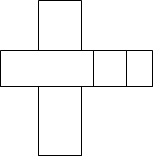
(a) Prism (b) cylinder (c) cube (d) cone
18. Name the figures below accordingly:
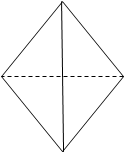
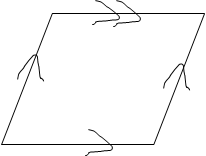
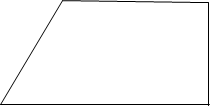
(a)Prism, kite and trapezium (b) pyramid, parallelogram and triangle (c) pyramid, parallelogram and trapezium (d) prism, parallelogram and polygon
19.
The value of the inequality above on the number line is _______ (a) X ≤ – 1 (b) X < – 1 (c) X > – 1 (d) X ≥ – 1
20. Solve this equation 5x + 5 = 26 + 2x (a) 5 (b) 26 (c) 7 (d) 8
21. Find the value of w/ 2v – w when w = – 3 and v = – 5
(a) 3/7 (b) – 3 /7 (c) 3/13 (d) – 3 /13
22. Express 6 ¼ as improper fraction (a) 25/4 (b) 24/11 (c) 25/2 (d) 24/5
23. Subtract 18 from the product of – 6 and 3 (a) 36 (b) – 36 (c) – 18 (d) 0
24. An airport runaway measuring 450m is drawn to a scale of 1cm to represent 100cm. find its length in the drawing (a) 4.5cm (b) 5.5cm (c) 4.ocm (d) 3.5cm
25. What is the area of a triangle with base 4cm and height 8cm? (a) 16cm2 (b) 9cm2 (c) 14cm2 (d) 6cm2
26. Each face of a cuboids is in the shape of a _____ (a) rectangle (b) circle (c) square (d) triangle
27. Which is the correct interpretation of the inequality represented in the number line below:
X ≥ – 2 (b) X ≤ – 2 (c) X < +2 (d) X > + 2
28. Calculate the area of a square advertising board of length 14cm (a) 196cm2 (b) 169cm2 (c) 691cm2 (d) 961cm2
29. A straight line joining two points on the circumference of a circle and passing through the centre of the circle is called _______ (a) diameter (b) chord (c) arc (d) radius
30. A solid whose faces are triangular and the base is a quadrilateral is called a ______ (a) pyramid (b) sphere (c) cube (d) prism
31. If X = 7, evaluate 6 + x – 2x (a) 1 (b) – 1 (c) 0 (d) 27
32. Solve for a in 3 (a + 2) + 3/ 4 2 = 0 (a) 4 (b) – 4 (c) – 3 (d) 3
33. Which of these inequalities is the correct interpretation of the diagram above? (a) X ≤ 1 (b) X < 1 (c) X ≥ 1(d) X > 1
34. Which of the number lines shows the proper representation of X ≤ 3?
35. If 24 = 2f +3f + f, find f (a) 8 (b) 4 (c) 6 (d) 2
36. Solve 2x – 6 < 4 diagrammatically
37. Simplify – 8 – (- 12) + (- 2) (a) – 2 (b) +2 (c) – 22 (d) +22
38. The point of intercession of x and y axis in a graph is called a/an _______ (a) Cartesian (b) origin (c) plane (d) coordinate
39. Find the area of a parallelogram with base 8cm and vertical height 5cm (a) 80cm2 (b) 40cm2 (c) 26cm2 (d) 13cm2
40. Which of the following interprets the above number line? (a) 2 < x >3 (b) 2 > x ≤ 3 (c) 2 < x ≥ 3 (d) 2 ≥ x ≤ 3
Mathematics Exam Questions Objectives (OBJ) Answers
1.C 2.C 3.D 4.B 5.D 6.C 7.D 8.D 9.D 10.D
11.C 2.C 13.C 14.C 15.C 16.A 17.C 18.C 19.C 20.C
21.A 22.A 23.D 24.A 25.A 26.A 27.A 28.A 29.A 30.A
31.B 32.C 33.C 34.C 35.B 36.- 37.B 38.A 39.B 40.D
SECTION B THEORY PARTS
ANSWER ALL QUESTIONS
- Solve for x; – ⅓ of 36x2 (4 marks)
b. When x = 4, y = – 5 and Ƶ = – 3. Find the value of:
i. (x + Ƶ) /(x + y) (3 marks) ii. (y + 5 Ƶ)/X (3 marks)
2. Solve the following and represent your answer in a number line accordingly
i. X ≤ – 3 and x ≤ 8 (3 marks)
ii. X < 7 and x ≤ – 5 (3 marks)
b. represent y < 6 and x ≥ – 6 in a Cartesian graph (4 marks)
3. Solve the following inequalities by representing your answer in a Cartesian graph
i. – 3y < – 6 (2 marks)
ii. – 2x + 4 ≥ 6 (2 marks)
iii. 2x ≥ 5x + 6 (2 marks)
b. A rectangular filed measures 45m by 30m. Draw a plan of the field. Use measurement to find the distance between opposite corners of the field. (4 marks)
4. Draw the graph of y = 4x – 7 for values of x from – 3 to + 3. From the graph find:
a.The value of y when x = 2.5
b. The value of x when y = – 13
The coordinates of the points where the line cuts the axis. (10 marks)
Junior Secondary School Questions 2nd term. Basic 8/JSS2 Examination Questions and answers for second term Obj & Theory-Edudelight Exam
JSS2 PHE Examination Question For Second Term
SECTION A – OBJECTIVE
- Englishman David Foster invented table tennis In___(a) 1970 (b) 1890 (c) 1980
- _____ involves hitting the ball over a net from one half of the table to the other (a) basketball (b) volleyball (c) table tennis
- The game of table tennis can also be called the___ game (a) ping pong (b) ludo (c) hyper
- Which of the following is not basic skills or techniques in table tennis __(a) the grip (b) the service (c) the scorer
- All are table tennis equipments except___(a) the net (b) the compound (c) the board
- Which of the rules is not correct about table tennis (a) service change at the count of two point (b) each server has two chance (c) ball must bounce once
- The nature of table tennis is ___(a) it’s a racket game (b) a ball is kept (c) its played as double
- Which of the following is not a basic type of grips? (a) forehand (b) right-hand (c) backhand
- ___ Conducts a toss for the competitors to start the game and declares the winner or loser (a) referee (c) coach (c) umpire
- ___ monitor the movement of balls that fall in and out of the court and signal to the umpire (a) linesman (b) referee (c) commentator
- ____ programme can be defined as a programme of health activities designed and executed purposely to improve on the health status of the school child (a) school health (b) school board (c) school doctors
- ___ is a process of ensuring that the environment is safe and conducive for members of the community (a) school health (b) community health (c) hygiene
- The acronym FRESH means___(a) focusing resources effective school health (b) focusing or effective school health (c) focusing for effective school program
- The school health programmed consist of __major component of activity (a) 3 (b) 5 (c) 4
- ___ pollution is the contamination of the environment with harmful, toxic and and hazardous substances. (a) pollution (b) environmental (c) school
- ___ can be defined as the release of substances that contaminate the environment and makes living difficult or unpleasant (a) pollution (b) environment (c) surrounding
- Which of the pollution is not major types of environmental pollution (a) noise (b) air (c) land (d) sand
- Which of the following is not effects of environmental pollution (a) health problems (b) wealth (c) sleeping disorder
- Which one of these is not preventive measures for environmental pollution? (a) ensure good health habit (b) avoid dangerous chemicals (c) eat beside gutters
- Which one is not an examples of health problems? (a) hypertension (b) fatigue (c) smoking
- Environmental pollution lowers the quality of the air, the land or the water (a) true (b) false
- Example of noise pollution is __ (a) smoke (b) sound (c) generator
- Example of land pollution is ___(a) energy (b) waste (c) house
- Example of air pollution is ____(a) gas (b) generator (c) home
- Example of water pollution is___ (a) oil (b) generator (b) car
- ___ health is a state of well-being of the whole body (a) Personal (b) school (c) public
- ___ comprises all the activities such as hygiene, exercise and adequate diet (a) health (b) development (c) personal health
- The purpose of school health is to ___ (a) chase away learners (b) control communicable diseases (c) flog disobedient students
- To establish the school health programmes, there must be adequate planning, administration (a) true (b) false
- The purpose of FRESH is to ____(a) improve health status (b) decrease health status (b) discomfort
PHE Exam Questions Objectives (OBJ) Answers
1.B 2.C 3.A 4.C 5.B 6.B 7.A 8.B 9.C
10.A 11.A 12.B 13.A 14.C 15.B 16.A 17.D
18.B 19.C 20.C 21.A 22.C 23.B 24.A 25.A
26.A 27.C 28.B 29.A 30.A
THEORY – ANSWER ONLY 3
1a. What do understand by fresh approach to school health program?
1b. What is the meaning of FRESH?
2a. Define School health program
2b. Define Environmental pollution list 4 types
3a. Suggest four general measures for preventing environmental pollution
3b. Give three equipment and facilities in tennis
4a. State two rules in tennis
4b. Mention four officials in tennis
JSS2 Security Education Examination Question For Second Term
SECTION A: Instruction: Answer all questions
- The following are major insecurity breaches facing Nigeria except (a) robbery (b) assassination (c) kidnapping (d) walking
- __________can be used to solve the problem of insecurity in Nigeria (a) security education (b) geography (c) social studies
- _____________ can be define as an act committed to violation of law (a) crime (b) job (c) justice
- ____________is the proper planning for preventing emergencies from happening (a) crime (b) law (c) emergency management
- ___________includes the selling transporting or importing of illegal substances (a) stealing (b) trafficking (c) robbery
- ___________is the Federal service established to render services during fire accident (a) LASTMA (b) Fire fighters (c) NEMA
- The following are the types of emergency situation except_____(a) collapsed building (b) food safety (c) food cooking
- Crime can be reduced through the following except_______(a) ensures the well-being of people (b) good education (c) reduction in population
- __________is a major cause of crime all around the world (a) over population (b) poverty (c) under population
- Rape can also be called______(a) sexual assault (b) trafficking (c) robbery
- Cult members are liable to committing _____(a) crime (b) rape (c) alcohol
- ___________is an agency established in Lagos to reduce road accident (a) LASEMA (b) NEMA (c) LASTMA
- _______is what to do if raped not when raped (a) report the crime (b) shout (c) keep it to oneself
- The following are examples of theft except_______________(a) burglary (b) robbery (c) looking (d) keeping of one’s property
- The law enforcement agencies can help to reduce __________(a) theft (b) crime (b) reading (d) eating
- Common crime in the school environment are these except________(a) social activities (b) gang activities (c) bullying (d) verbal abuse
- The following are government agents that crime can be reported to except_________ (a) night guard (b) police force (c) army (d) FRSC
- Government officials are ultimately responsible for disasters (a) Yes (b) No
- The following are among emergency management except_____(a) flood (b) smoking (c) fire disaster (d) accident
- Emergency management agency’s include the following except____________(a) NEMA (b) LASEMA (c) LASTMA (d) PHCN
- A situation where a student is sick, he or she needs __________(a) medical (b) police (c) fire (d) first aid
- The reported evidence should be kept safe to avoid (a) being stolen (b) duplicated (c) seen (d) none of the above
- Someone with a lying tongue is most likely to end up as a _________(a) custom (b) lawyer (c) prince (d) criminal
- A person is declared a criminal only by _____________(a) a court of law (b) the police (c) school authority (d) church
- We can go to the place of crime only after the crime has been duly reported to_______(a) compound guard (b) police (c) the reporter (d) the church
- Bad gang contributes to _______ in our society (a) success (b) development (c) growth (d) problems
- ______________is the agency for controlling and checking out counterfeit drugs (a) Nigeria police force (b) the school board (d) national drug law enforcement agent (d) the drug dealers association
- A good reported must be ______ (a) illiterate (b) literate (c) blind (d) dumb
- The most dangerous effect of drug abuse is _________(a) stroke (b) hallucinations (c) pains (d) drunkenness
- Getting public money in an unlawful way for personal use is known as ______(a) theft (b) embezzlement (c) burglary (d) murder
Security Education Exam Questions Objectives (OBJ) Answers
1. D 2.A 3.A 4.C 5.B 6.B 7.C 8.C 9.B
10.A 11.A 12.A 13.A 14.D 15.B 16.A 17.D
18.A 19.B 20.D 21.D 22.D 23.D 24.A 25.B
26.D 27.D 28.B 29.A 30.B
THEORY (Answer 5 Questions only )
1a. Define Emergency management
1b. Mention 5 situations that can lead to emergency management
2a. Outline 5 ways of responding to emergency situations
3. Mention 5 things to do in times of emergency situations
4. List 4 types of emergency situation
5. Mention four (4) types of responses in times of emergency
6. Define Crime and states 5 causes of crime
7. Define Emergency and state types of emergency
8. State 3 emergency management agencies and their roles or functions
JSS2 Social Studies Examination Question For Second Term
SECTION A – OBJECTIVE
- ______ is not a procedure in marriage (a) Courtship (b) Proposal (c) Acceptance (d) Friendship
- ______ is the belief in the existence of god (a) Custom (b) Church (c) Islamic (d) Religion
- The following are ways of preventing intake of harmful substance except ________ (a) Avoid eating of stale food (b) Looking out for the expiring dates (c) Smoking of Cigarette (d) Avoid eating of dirty and infected food
- In the _____ part of Nigeria , traditional marriage is very expensive (a) western (b) southern (c) eastern (d) northern
- One of the following is not what Islam teaches (a) patience (b) love (c) violence (d) honesty
- ____ is defined as the worth of something (a) integrity (b) courage (c) value (d) fairness
- Probity is the quality of behaving in a moral and honesty way (a) True (b) False
- What type of marriage allows monogamy (a) Christian and curt (b) Islamic and customary (c) Tradition (d) Islamic
- One of the following is not a similarities in our religion (a) War (b) Oneness OF God (C) Agents of socialization (c) Peaceful co – existence
- One of these is not an advantages of living together in the family (a) Quarreling (b) Love (c) Confidence (d) Provision
- ________ is the state of being male or female (a) Stereotypes (b) Gender (c) Human (d) All of the above
- One of the following is not an accidents in the school (a) Falls (c) Cuts (c) Fighting (d) Burns
- This is a marriage conducted in a registry office of a court (a) Customary (b) Islamic (c) Ordinance (d) Christian
- Hausas call God _________ (a) Allah / Ubangiji (b) Abasi (c) Osandowa (d) Olorun
- _______ is the acceptable or the right way of doing things in the society (a) Religion value (b) Customary value (c) Societal value (d) None of the above
- _________ is the ability to face pain without fear (a) Probity (b) Fair play (c) Courage (d) Uprightness
- In Edo traditional marriage, the groom wears _________ (a) Sokoto and Agbada (b) Wrappers and beads (c) Iro and buba (d) Buba and trouser
- Living together promotes happiness, Protection and growth in the family (a) True (b) False
- These are the seminaries in male and female except _________ (a) They both have legs (b) They are both human (c) They don’t have the same body organs (d) They both have eyes
- Gender ________ are the rules or function that people tend to expect of a particular gender (a) Role (b) Function (c)Stereotype (d) Principles
- Cutting one’s fingers on the door is accident in the school (a) True (b) False (c) maybe
- _________ is a process that brings together two different families (a) War (b) Religion (c) Marriage (d) Traditions
- What is constant in almost all societies throughout the world is ___________ (a) Non – existence of God or gods (b) Existence of God or gods (c) A, B (d) None of the above
- African traditional religion possess the following except _______ (a) Physical objects representing them (b) Written scriptures (c) Sacrifice (d) No written scriptures
- The quality of being honest and having moral principles is called _________ (a) Honesty (b) Integrity (c) Probity (d)Contentment
- ________ bond is the connection or close relationship that exists among family members (a) Church (b) Religion (c) Societal (d) Family
- Female are fertile till old age (a) True (b) False
- The Holy Bible is used where? (a) Shrine (b) Church (c) Mosque (d) Market
- All these are accidents in the school except one (a) Knife cut (b) Stealing (c) Burnt by fire (d) Cutting the nails
- Pastors or Priests conduct _________ marriage (a) Court (b) Christian (c) Traditional (d) Islamic
- ________ is the attempt on the part of a man to maintain relationship with his creator (a) Value (b) Marriage (c) Religion (d) Tradition
- JESUS CHRIT is the founder of _________ (a) Islamic (b) African tradition (c) Religion (d) Christianity
- _________ is associated with a person who is sincere and honest (a) Contentment (b) Honesty (c) Integrity (d) Trustworthiness
- Family bonding enhancing the following except one (a) Love (b) Communication (c) Hatred (d) Closeness
- A man is supposed to take care of the home, children, cook etc (a) True (b) False (c) maybe
- Islam religion got to African through the ________ (a) Missionaries (b) Europe explorers (c) Trans Saharan traders (d) All of the above
- The following steps should be taken when there is accident in the school except one (a) Report the accident (b) Give first aid (c) Punish the students (d) Take victim to a nearby hospital
- The following are purpose of marriage except one (a) Companionship (b) Unity of families (c) Children (d) None of the above
- _________ religion is as old as human race (a) African traditional (b) Islamic (c) African (d) Christian
- Islam spread from ________ to other parts of the world (a) South Africa (b) Nigeria (c) Saudi Arabia (d) America
Social Studies Exam Questions Objectives (OBJ) Answers
1. C 2.D 3.C 4.C 5.C 6.C 7.A 8.A 9.A
10.A 11.B 12.C 13.C 14.A 15.C 16.C 17.B
18.A 19.C 20.A 21.A 22.C 23.B 24.B 25.B
26.D 27.B 28.B 29.B 30.B 31.C 32.D 33.C
34.C 35.B 36.C 37.C 38.D 39.A 40.C
SECTION B (THEORY PART) ANSWER 4 QUESTIONS ONLY
- Define Harmful substance
b. State five (5) ways of preventing harmful substance
2.State five (5) ways of preventing accidents in the school
3. What is Societal Values
b. List and explain five (5) examples of societal value
4. Define Gender
b. State three (3) differences each between male and female
5a. Define Marriage and types
5b. State 3 conditions of marriage
JSS2 Yoruba Examination Question For Second Term
OLODUN KEJI SEKONDIRI ( J.S.S TWO )
IPIN KINNI
Dahun gbogbo ibeere wonyii
- “Abiodun” je ______ (a) omo ti iya re bi si oju ona (b) omo ti iya re bi so ju ogun (d) omo ti iya re bi ni akoko odun Pataki
- “Dada” je _______ (a) omo ti irun ori re ta koko (b) omo ti irun re gun (d) omo ti irun re funfun
- Ewo ni kii se oruko abiku? (a) ko kumo (b) malomo (d) kehinde
- Ojo ______ ni Yoruba n somoloruko ni aye ode-oni (a) kewaa (b) kefa (d) kejo
- _________ je oruko oriki (a) Temitope (b) Ajoke (d) Kokumo
- Oruko miiran ti a tun le pe aroko asotan ni _______ (a) oniroyin (b) alapejuwe (d) alalaye
- _______ ni asa siso omokunrin ati omobinrin ti won ti balaga papo gege bi oko ati aya (a) oye jije (b) isomoloruko (d) igbeyawo
- Asa iran- ara-eni lowo ti a wopo laarin awon agbe ni _____ (a) esusu (b) oge sise (d) aaro
- A le be owe lati fi ______ (a) ja o le (b) ko ile (d) pa eniyan
- Ewo ni kii se asa iran-ara-enilowo? (a) ebese (b) ajo (c) oye
- Olori ele susu gbogbo je _____ eniyan (a) olootu (b) apaniyan (d) odaju
- Iye owo ti eniyan ba lagbara ni o maa n di a gege bi ______ (a) owe (b) aaro (d) ajo
- Ewi alohun fun orisa ogun ni ________ (a) ogun pipe (b) ijala (d) oya pipe
- Esa tabi iwi jemo esin orisa _____ (a) egun gun (b) ogun (d) esu
- Orisa ti a maa n fi aja bo ni ______ (a) obatala (b) babalawo (d) ogun
- sango pipe jemo orisa _____ (a) esu (b) sango (d) Egungun
- Ewi alohun tumo si ______ (a) orin ibile (b) ohn orin fuji (d) ohun orin ti o je abalaye
- ______ ni ami isegun ogun jija (a) igi (b) ewe tutu (d) ibon
- __________ ni olori ogun ile Yoruba (a) oduduwa (b) aare-onakankanfo (d) alaketu
- _______ le fa ogun jija (a) aala ile (b) ojo ori (d) oloye ogun
- Ki ni “igba” je ni nomba? (a) 200 (b) 300 (d) 50
- Onka Yoruba fun “400” ni _____ igba (b) ogorun (d) irinwo
- Sisun ni ekun iyawo , kiko ni _____ (a) etiyeri (b) olele (d) rara
- ______ lo maa n sun eku iyawo (a) baba iyawo (b) olomoge ti o rele oko (d) iyawo ti oko re ku
- ______ko si lara ayeye ile Yoruba (a) igbeyawo (b) isinku omode (d) isomoloruko
- Igbese akoko ninu aroko ni _______ (a) adiresi (b) yiyan ori-oro (d) ikadii
- Awon onise wo ni a n ki bayii “Oju gbooroo”? (a) agbe (b) onidiri (d) amokoko
- Bawo ni a se n ki agbe lenu ise? (a) aboruboye (b) aroko bodunde (d) aroye
- Ki ni oruko osu ti o keyin ninu odun? (a) owewe (b) belu (d) ope
- Ewo ni kii se iwa omoluabi ninu awon wonyii? (a) opuro (b) iteriba (d) otito
IPIN KEJI: Dahun Ibeere meta
(1). Ko aroko lori ori-oro kan ninu meji isale yii
(a) Ile – Eko mi
(b) Ore mi ti mo feran ju
(2). Koa won Figo wonyi ni Onka
(i). 100 (ii) 200 (iii) 50 (iv) 80 (v) 400
3a. Ko oruko amutorunwa marun-un
3b. Ko oruko oriki marun-un
4a. Daruko awon oloye ogun jija marun-un
4b. Daruko awon ohun elo ogun jija marun-un
5a. Ko awon ona iran-ara –enilowo mefa nile Yoruba
5b. Daruko awon ayeye ti a maa nse nile Yoruba (merin)
JSS2 French Examination Question For Second Term
J.S.S TWO ( BASIC 8)
FRENCH – STUDIES
2ND TERM EXAMINATION
SECTIONA: Instruction: Answer all questions
Travail la classe – Escrivez en Anglais
- Conteau = _____________
- Refrigerateur = ______________
- Cuisinière = ________________
- Ventilateur = _____________
- Tableau = ______________
Escrivez en Français – Write in French
- Fry pan is ____ (a) Plaque (b) Poele
- Soap is ____(a) Savon (b) Èponge
- Spoon is _____ (a) Plaque (b) Cuillère
- Chair is ____(a) Chaise (b) Livres
- Pillow is _____(a) Ampoule (b) Oreiller
Escrivez en Anglaise – Write in English
1. Cet homme est timide =
2. Ces garcons sont bon =
3. Cet homme est honnete=
4. Ces filles sont courageuses=
5. Cette femme est paresseuse=
Escrivez en Francais – Write in French
6. These boys are courageous =
7. This woman is intelligent =
8. These girls are good =
9. This boy is hardworking =
10. These girls are hardworking=
Escrivez en Anglaise – Write in English
1. Elle est grand =
2. IL est lumiere en teint =
3. Elle a des nez gros et pointu =
4. IL a des un gros visage =
5. Elle a des yeux noir et vert =
- Qu’est le president du Nigeria? = (a) Il s’appelle monsieur Bola Ahmed Tinubu (b) Il s’appelle monsieur mohamadu Buhari
- Qu’est le gouverneur de l’etat de Lagos? = (a) Le gouverneur de l’etat de Lago s’appelle monsieur Akinwunmi Ambode (b) Le gouverneur de l’etat de Lago s’appelle monsieur Babajide Sanwolu
- Qu’est le Pasteur de l’eglise de Redeem? = (a) Il s’appelle, Pasteur Enoch Adejaye Adeboye (b) Il s’appelle, Pasteur Enoch Adejaye Mike Bamiloye
- Qui est le directeur de l’ecole d’ elias international ? (a) Il s’appelle monsieur Igineur Elias Eliaja Dosunmu (b) Il s’appelle monsieur Igineur Elias Eliaja Damilare
- Mon Ecole est ______ (a) petite (b) grande
Je suis Ade, un beau garcon, genereux sympathique et gentil. Je travaille au minstere de l’education. Pai un ami d ‘enfance qui s’appelle Paul. Il travaille dans un hotel. Il a deux frères mais il n’a pas de soeur. Je l’aime beaucoup parce qu’il est trest souriant.
Je m’appelle Nike, j’habite a Abuja avec ma petite soeur. J’ai 18 ans. Je suis grande et grosse. J’ai les cheveux courts et frises. J’ai les yeux bruns. Je suis tres travailleuse j’aime faire le sport. Je n’aime pas las musique classique.
QUESTIONS
1. Comment s’appelle le garҫon?
2. Comment s’appelle la fille ?
3. Quel age a Nike ?
4. Oui J’habite Nike ?
5. Ade a combien de frere et sœur ?
Choose the correct from of the verbs in the bracket
- Je _____________ mon devoir (faire)
- Maman _____________ manger du riz (aimer)
- Qu’est-ce qu’il ____________ dans la chambre? (faire)
- Les enfants _______________ au lit (etre)
- Qu’est-ce qu’ils ______________ a la maison (faire)
- J’ _______________ beaucoup (aimer)
- Nous ______________ la musique highlife (aimer)
- Dayo _______________ un etudiant (etre)
- Tolu ____________ assez grande (etre)
- Que _____________ tu? (manger)
JSS2 Home Economics Examination Question For Second Term
JUNIOR TWO (2) J.S.S. 2 / GRADE 8 / BASIC 8
HOME – ECONOMICS
2ND TERM EXAMINATION
SECTION A – OBJECTIVE
- ____is the worth placed on an item which cannot be seen but are beliefs and feelings (a) family (b) value (c) item
- _______ are values that are important for their own sake and they are higher values (a) intrinsic (b) extrinsic (c) instrumental
- ______ is the particular way of life of a person, family, nation or a group of people. (a) people (b) family (c) lifestyle (d) friends
- Which of the following is NOT an example of intrinsic value. (a) freedom (b) human (c) dignity (d) leisure
- Which one of these does NOT influence values and lifestyle (a) family (b) resources (c) education (d) friends
- A situation that marks a turning-point when things cease to go on as usual in a family is called ______A. crisis B. conflict C. decision D. disunity.
- _____ is one of the family crises. A. Joblessness B. Conflict C. Monitor D. Peace.
- Crisis can also be referred to ______A. conflict B. demand C. challenges D. disunity
- __________ is a situation that affect family lifestyle A. Crisis B. Conflict C. Value D. Resolution
- Disagreement among the family members is referred to as___A.crisis B. worth C. conflict D. violation
- A______ is a struggle between two or more people who disagree that struggle may be verbal physical or both. (a) crisis (b) conflict (c) family crisis (d) hope
- All of the following are causes of conflict except ___(a) power struggles (b) situational causes (c) lifestyle (d) power struggles
- All of the following are ways of resolving family crisis except__ (a) setting limits (b) divorce (c) following up (d) arguing stage
- For the welfare of the family, conflicts are best _____A. resolved B. suppressed C. overlooked D. war.
- Unresolved conflict in a family can lead to ____ A. peace B. negotiation C. hostility D. happiness
- _________ is one of the causes of conflict. A. Greediness B. Love C. Peace D. Unity
- Striving to be in control of others is referred to as _ A. personality differences B. empowerment C. situational causes D. power struggle
- The monthly flow of blood through the vagina in every woman of child-bearing age is called ____A. menstruation B. menstrual period C. menstrual circle D. maturation
- The menstrual circle _____A. differs with persons B. is not common C. is the same for all D. never exist
- The period of monthly flow is called ______A. blood flow B. menstrual period C. menstrual circle D. menstruation.
- The unpleasant smell that comes from the body is called body_____A. perfume B. complexion C. odour D. gas
- Breast development in girls is _______A. a sign of size B. a sign of illness C. a sign of class D. a sign of puberty.
- ____ is the practice of keeping yourself and other surroundings clean, especially in order to prevent illness or the spread of diseases. (a) puberty (b) hygiene (c) hygienic (d) personal care
- Adolescence period is a period of ______A. multiplication B. becoming an adult C. full maturation D. grown-up
- The following are the characteristics of adolescents except ____A. bother about their appearance B. attracted to opposite sex C. concern about their future D. bother about living.
- Sexuality related information can be obtained through the following ways except _____A. siblings B. sleeping and resting C. reading novels D. parent
- _____ is not an adolescent challenges. A. Sleeping B. Peer pressure C. Status problem D. Independence
- An adolescent is ___ passing through adolescence period. A. man or woman B. boy or girl C. old or young D. girl
- Sexually transmitted disease is an illness spread from one person to another through _____A. Hand-shake B. Dancing C. Sexual contact D. Sharing clothing
- One of the following is not a sexually transmitted disease. A. Gonorrhea B. Malaria C. HIV D. Syphilis
- Human Immune Deficiency Virus causes ____A. AIDS B. syphilis C. gonorrhea D. malnutrition.
- One of the following has no known cure at the moment. A. HIV/AID B. Gonorrhea C. Syphilis D. Malaria
- The process where a person prescribes a drug for self is called self __A. protection B. injection C. medication D. drug abuse.
- The use of one of the following prevents serious mistakes in dress making A. Styles B. Patterns C. Seams D. Fashion.
- Body measurement should be taken over _____A. tight or closed-fitting garment B. loose gown C. high-heeled shoes D. loose-fitting garment
- Which of the following is not a tool for taking body measurement? A. Tape measure B. Pencil C. French curve D. String.
- Which of the following are used as guides in garment construction? A. Thread B. Brown paper C. pencil D. Patterns
- Measurement for bodice include the following except __ A. bust B. hip C. shoulder D. front width.
- The basic or foundation patterns often drafted are referred to as____(a) pattern (b) blocks (c) bodice (d) garments
- ____ is indicated by two broken lines for stitching. (a) darts (b) notches (c) pattern (d) fabric
- There are ____ types of Bodice (a) 1 (b) 3 (c) 2 (d) 4
- ____patterns always have different types of markings and symbols. (a) private (b) commercial (c) business (d) public
- _____ is made to fit a particular person. (a) drafted pattern (b) commercial pattern (d) pattern design
- _____ is an illness spread from one person to another through sexual contact. (a) HIV (b) AIDS (c) Malaria (D) STD
- We can prevent body odour through the following except___ (a) change underwear (b) avoid bath regularly (c) wearing clean clothes (d) perfume
- The extra allowance provided in a garment is called ______A. filling B. free size C. extra large D. fullness
- Which of the following is not used to create or control fullness in garments? A. Darts B. Tucks C. Bias D. Pleats
- The tapered folds of fabric stitched on the wrong side of a garment is called ____ A. fullness B. dart C. ease D. tuck
- Which of the following is made up of small soft folds? A. Gathers B. Binding C. Shirring D. Dart
- ____ is produced with several rows of gatherings. A. Shirring B. Bias C. Dart D. Pleats
JSS2 Home Economics Exam Questions Objectives (OBJ) Answers
1. B 2.A 3.C 4.D 5.B 6.A 7.A 8.C 9.A
10.C 11.B 12.C 13.B 14.A 15.A 16.C 17.D
18.A 19.A 20.B 21.C 22.D 23.B 24.B 25.D
26.B 27.A 28.B 29.C 30.B 31.A 32.A 33.C
34.B 35.A 36.D 37.D 38.D 39.B 40.A 41.C
42.B 43.A 44.D 45.B 46.D 47.C 48.B 49.A
50.A
OBJECTIVES = 50 ÷2 = 25
THEORY
(ANSWER 5 QUESTIONS ONLY )
( 5 x 9 = 45)
- Explain the meaning of values and lifestyle
- Enumerates the different types of values and lifestyle
- State five factors that influence values and lifestyle
- State four causes of conflicts in the family
- State methods of conflict resolution in the family
- What is body odour?
- List three causes of body odour.
- Explain three responsibilities of a good homemaker.
- Narrate two qualities of a good homemaker.
- Explain two characteristics in adolescent boys and girls.
- State two ways through which HIV/AIDS spread from one person to another.
- Outline three ways of preventing HIV/AIDS infection.
- State three guidelines for taking body measurement.
- State two disadvantages of commercial patterns.
- State three uses of darts.
- List and explain types of darts.
- Explain the process of making gathers
- List and explain types of stitches.
- State five reasons for wearing clothes.
- List and explain types of pleats. And State two uses of tucks.
JSS2 Social Studies Examination Question For Second Term
JUNIOR TWO (2) J.S.S. 2 / GRADE 8 / BASIC 8
SOCIAL – STUDIES
2ND TERM EXAMINATION
SECTION A – OBJECTIVE
- ______ is not a procedure in marriage (a) Courtship (b) Proposal (c) Acceptance (d) Friendship
- ______ is the belief in the existence of god (a) Custom (b) Church (c) Islamic (d) Religion
- ____ traditional religion in different from the religion of Islam and Christianity (a) America (b) Ghana (c) Italy (d) Africa
- In the _____ part of Nigeria , traditional marriage is very expensive (a) western (b) southern (c) eastern (d) northern
- One of the following is not what Islam teaches (a) patience (b) love (c) violence (d) honesty
- ____ is defined as the worth of something (a) integrity (b) courage (c) value (d) fairness
- Gender is the state of not being male or female (a) True (b) False (c)
- What type of marriage allows monogamy (a) Christian and curt (b) Islamic and customary (c) Tradition (d) Islamic
- One of the following is not a similarities in our religion (a) War (b) Oneness OF God (C) Agents of socialization (c) Peaceful co – existence
- One of these is not an advantages of living together in the family (a) Quarreling (b) Love (c) Confidence (d) Provision
- ________ is the state of being male or female (a) Stereotypes (b) Gender (c) Human (d) All of the above
- One of the following is not an accidents in the school (a) Falls (c) Cuts (c) Fighting (d) Burns
- This is a marriage conducted in a registry office of a court (a) Customary (b) Islamic (c) Ordinance (d) Christian
- Hausas call God _________ (a) Allah / Ubangiji (b) Abasi (c) Osandowa (d) Olorun
- _______ is the acceptable or the right way of doing things in the society (a) Religion value (b) Customary value (c) Societal value (d) None of the above
- _____is the head of the family (a) grandfather (b) mother (c) father (d) children
- In Edo traditional marriage, the groom wears _____(a) Sokoto and Agbada (b) Wrappers and beads (c) Iro and buba (d) Buba and trouser
- Living together promotes happiness, protection and growth in the family True / False
- These are the seminaries in male and female except___(a) they both have legs (b) they are both human (c) they don’t have the same body organs (d) they both have eyes
- Gender ________ are the rules or function that people tend to expect of a particular gender (a) Role (b) Function (c)Stereotype (d) Principles
- Cutting one’s fingers on the door is accident in the school (a) True (b) False (c) maybe
- _________ is a process that brings together two different families (a) War (b) Religion (c) Marriage (d) Traditions
- What is constant in almost all societies throughout the world is ___________ (a) Non – existence of God or gods (b) Existence of God or gods (c) A, B (d) None of the above
- These are examples of societal values except ___(a) fair lay (b) discipline (c) bad conduct (d) honesty
- Efik call God___ (a) Ibom (b) Chineke (c) Edidem (d) Allah
- ________ bond is the connection or close relationship that exists among family members (a) Church (b) Religion (c) Societal (d) Family
- Female are fertile till old age (a) True (b) False
- ____ are more rational, stable and strong (a) women (b) men (c) youth (d) children
- All these are accidents in the school except one (a) knife cut (b) stealing (c) burnt by fire (d) cutting the nails
- Pastors or Priests conduct _____marriage (a) court (b) Christian (c) Traditional (d) Islamic
- _______is to attempt on the part of a man to maintain relationship with his creator (a) value (b) marriage (c) religion (d) tradition
- JESUS CHRIST is the founder of_____ (a) Islamic (b) African tradition (c) Religion (d) Christianity
- African traditional religion possess the following except (a) physical object (b) written scriptures (c) sacrifice (d) No written scriptures
- Family bonding enhancing the following except one (a) Love (b) Communication (c) Hatred (d) Closeness
- A man is supposed to take care of the home, children, cook etc. (a) True (b) False (c) maybe
- Women are _____except one (a) prone to tears (b) unable to keep secret (c) staying away from home (d) emotional being
- The following steps should be taken when there is accident in the school except one (a) report the accident (b) give first aid (c) punish the students (d) take victim to a nearby hospital
- The following are purpose of marriage except one (a) Companionship (b) Unity of families (c) Children (d) None of the above
- _________ religion is as old as human race (a) African traditional (b) Islamic (c) African (d) Christian
- Islam spread from ________ to other parts of the world (a) South Africa (b) Nigeria (c) Saudi Arabia (d) America
- ____is also known as mutual values (a) societal values (b) family value (c) religion values (d) company value
- All are sources of values except one (a) family (b) media (c) school (d) marriage
- The following are the advantages of living together in the family except one (a) happiness (b) remove loneliness (c) spiritual growth (d) misunderstanding
- Gender is the biological sex of human beings True / False
- All except one is not the importance of gender equality (a) it promotes peace (b) it promotes unhealthy relationship (c) it encourages respect (d) it promotes justice
- Christian marriage is done where? (a) church (b) shrine (c) mosque (d) court
- ____is the degree of quality attached to something (a) respect (b) values (c) honour (d) regard
- ____began among the Jews before spreading to other parts of the world (a) Islam (b) African tradition (c) Christianity (d) All of the above
- How many types of marriage do we have? (a) 5 (b)3 (c) 2 (d) 4
- Christianity took root in Nigeria in what century? (a) 15th (b) 20th (c) 19th (d) 10th
- One of these is not an importance of good family reputation (a) helps to build good name (b) brings about respect from people (c) brings about disunity (d) brings favor from the society
- The following are the factors that influences gender roles except___(a) parents (b) peer pressure (c) education (d) society
- ____is anything that is not safe for the body and could cause problem if taken in? (a) harmful substance (b) bad food (c) healthy food (d) handful substances
- The following are examples of harmful substance except___(a) stale food (b) rotten food (c) impure water (d) well cooked food
- Acting according to our values brings about happiness and contentment True / False
- Islam religion got to African through the _____(a) missionaries (b) Europe explorers (c) Trans Saharan trades (d) All of the above
- The Holy Bible is used where? (a) Shrine (b) Church (c) Mosque (d) Market
- Societal ____is the acceptable way of doing things in society (a) values (b) co-operation (c) standard (d) All of the above
- African traditional religion possess the following except___(a) physical objects representing them (b) written scriptures (c) sacrifice (d) no written scriptures
- The following are ways of preventing intake of harmful substance except___(a) avoid eating of stale food (b) looking out for the expiring dates (c) smoking of cigarette (d) avoid eating of dirty and infected food
SECTION B (THEORY PART)
ANSWER 3 QUESTIONS ONLY
- Define Harmful substance
b. State five (5) ways of preventing harmful substance
- State five (5) ways of preventing accidents in the school
- What is Societal Values
b. List and explain five (5) examples of societal value
- Define Gender
b. State three (3) differences each between male and female
5a. Define Marriage and types
5b. State 3 conditions of marriage

